
OOBThaiAmulets
LP Pherm Punyavasano - Wat Klang Bang Kaew
LP Pherm Punyavasano - Wat Klang Bang Kaew
Couldn't load pickup availability
MS03
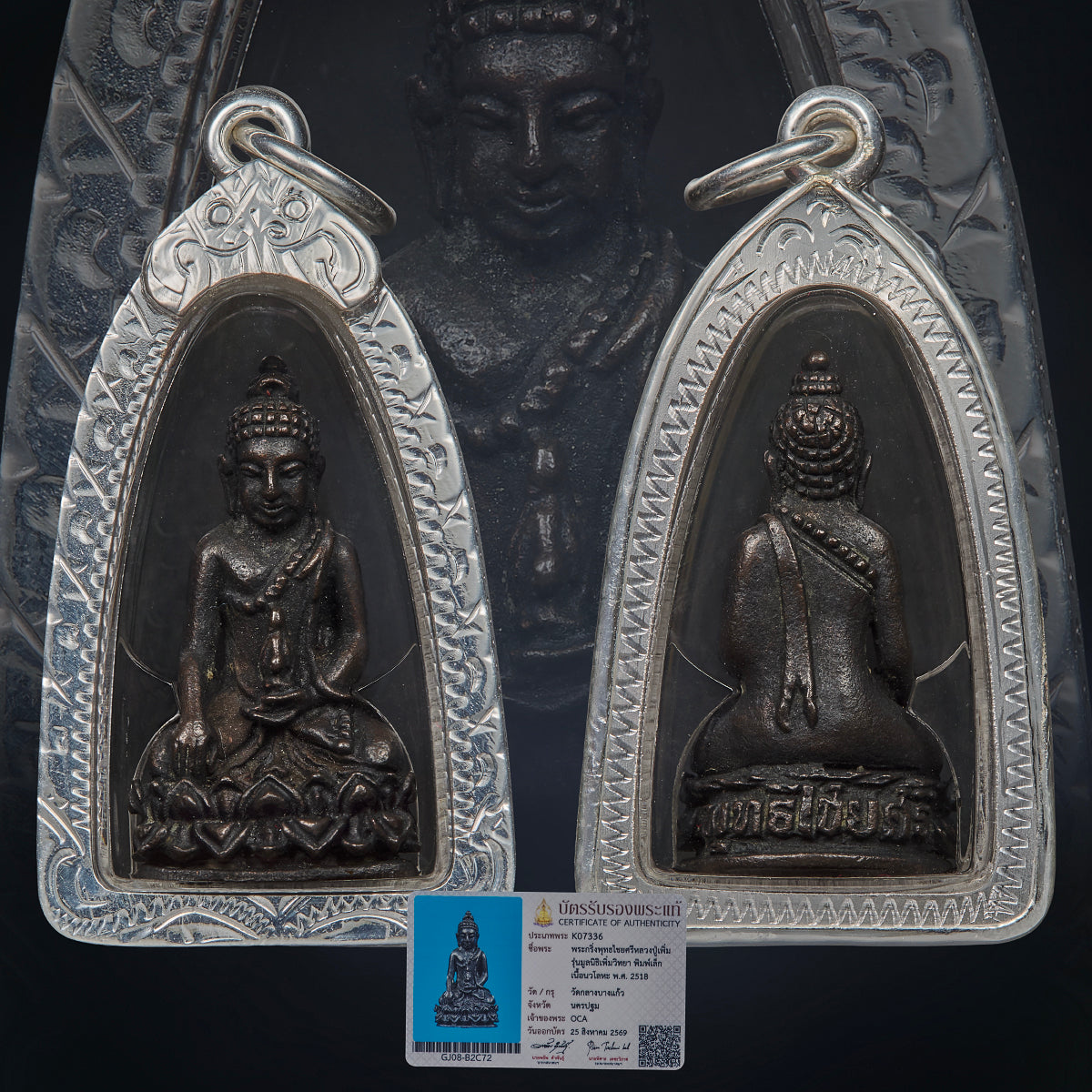
Phra Kring Phutta Chai Si
LP Pherm Punyavasano | Wat Klang Bang Kaew, Nakhon Pathom
B.E. 2518 (1975)
3cm
Mainstream Artifact
Samakom Certification Card (GJ08-B2C72)
Encased in Silver
━━━━━━━━━━━━━━━━━━━━━━━━━━━━━━━━
Sacred Craftsmanship
The Phra Kring Phutta Chai Si B.E. 2518 was created under the patronage of the Phoem Wittaya Foundation, with LP Pherm of Wat Klang Bang Kaew serving as the principal consecrating master.
The project was particularly distinguished by its elaborate preparation. Accounts of the foundation's records describe 459 inscribed metal sheets and takruts contributed by five senior ecclesiastical dignitaries and 219 revered monks, with the materials prepared for incorporation into the sacred casting alloy.
Each artifact was individually cast from carefully prepared sacred metals. Natural variations in texture, colour, form and casting characteristics make every piece unique.
Exact Piece to be given
━━━━━━━━━━━━━━━━━━━━━━━━━━━━━━━━
Personal Experiences Shared by Luksits
Among devotees of LP Pherm, the B.E. 2518 Phra Kring series is traditionally associated with Metta, commercial prosperity, protection and favourable opportunities.
Collectors commonly speak of carrying the Phra Kring during important business dealings, believing it supports smoother negotiations, customer goodwill and assistance from others.
Others favour it for daily protection and Klaew Klad, particularly when travelling or working in demanding environments.
An important reason for its reputation is the unusually extensive consecration history. Older collectors frequently place considerable value on the combination of LP Pherm's personal blessings, the sacred metals contributed by numerous masters and the participation of respected monks from different regions of Thailand.
━━━━━━━━━━━━━━━━━━━━━━━━━━━━━━━━
Summary
The Phra Kring Phutta Chai Si B.E. 2518 is among the notable commemorative creations associated with LP Pherm during the later years of his life.
Its importance rests on three principal characteristics: the extensive gathering of sacred casting materials, the separately consecrated Kring pellets and the unusually elaborate sequence of blessing ceremonies.
The foundation's accounts describe contributions from five senior ecclesiastical dignitaries and 219 monks, followed by major consecrations culminating in a gathering of 108 monks.
Beyond its spiritual significance, the project supported the construction of educational facilities at Phoem Wittaya School, reflecting LP Pherm's longstanding association with Wat Klang Bang Kaew and its community.
━━━━━━━━━━━━━━━━━━━━━━━━━━━━━━━━
Historical Background
LP Pherm Punyavasano was a respected abbot of Wat Klang Bang Kaew, Nakhon Pathom, and a principal disciple of LP Boon, one of the temple's most celebrated masters.
Entering the monastic community as a young novice, LP Pherm spent his life within the Buddhist order. He studied directly under LP Boon and inherited important aspects of the temple's traditional Wicha, including sacred-object preparation, consecration and ritual medicine.
Following LP Boon's passing in B.E. 2478, LP Pherm succeeded him as abbot.
By B.E. 2518, LP Pherm was approximately 89 years old and had already acquired a longstanding reputation for his religious practice and traditional knowledge.
The Phoem Wittaya Foundation organised the B.E. 2518 series as a substantial temple-related undertaking, combining fundraising for education with the production of sacred artifacts.
The project included Phra Kring, Phra Chaiwat, LP Pherm cast images, Phra Sangkachai, Phra Pidta, medals and powder amulets, all associated with the wider consecration programme.
━━━━━━━━━━━━━━━━━━━━━━━━━━━━━━━━
Origins of the Materials
The Nawa Loha composition is one of the defining characteristics of this Phra Kring series.
According to accounts of the Phoem Wittaya Foundation's preparations, the casting materials included 459 inscribed metal sheets and takruts contributed by five senior ecclesiastical dignitaries and 219 revered monks.
These materials represented a broad collection of sacred metals, individually associated with the mantras and consecration practices of their contributing masters.
The metal sheets were ritually prepared before being incorporated into the casting stock.
The alloy was also reportedly enriched with a substantial quantity of gold, described in collector accounts as approximately 110 baht-weight of gold for the wider Phra Kring casting project.
The completed Nawa Loha composition developed the characteristic dark metallic appearance associated with traditional multi-metal castings.
Separately consecrated Kring pellets
A particularly distinctive feature concerns the internal Kring pellets.
Before insertion into the Buddha images, the foundation reportedly arranged for 19 recognised monks to consecrate the pellets individually, adding another stage of ritual preparation before the completed figures entered the major ceremonies.
━━━━━━━━━━━━━━━━━━━━━━━━━━━━━━━━
Ritual
The Phra Kring Phutta Chai Si underwent an extensive programme of consecration spanning B.E. 2517–2518.
Rather than relying upon a single ceremony, the foundation organised 3 principal ritual occasions, supplemented by individual blessings from LP Pherm and other participating monks.
First Ceremony – 19 October B.E. 2517
The first major ceremony concentrated on the preparation and consecration of the sacred metal sheets and takruts.
Accounts describe the gathering of 459 inscribed sheets and takruts, contributed by five senior ecclesiastical dignitaries and 219 monks.
The Supreme Patriarch is recorded in collector histories as presiding over this preparatory occasion.
The consecrated metals were intended for the casting process, establishing the ritual foundation of the Phra Kring series before the completed images were produced.
Royal Casting Ceremony – 3 March B.E. 2518
A significant event in the project's history was the ceremonial pouring of molten metal at Wat Klang Bang Kaew.
Accounts record that the then Crown Prince of Thailand, now King Rama X, presided over the casting ceremony on 3 March B.E. 2518.
This royal association added considerable ceremonial importance to the foundation's undertaking.
The casting itself followed traditional methods, incorporating the prepared sacred metals into the Buddha images.
Second Ceremony – 23–25 April B.E. 2518
The second major consecration was conducted over three days and three nights.
Following the collective ceremony, accounts describe an additional five days of individual consecrations by respected monks.
This extended programme allowed the completed artifacts to receive blessings from masters representing different regional traditions.
Among the prominent monks named in accounts of the wider consecration programme were:
-
LP Toh – Wat Pradu Chimphli, Bangkok
-
LP Ngern – Wat Don Yai Hom, Nakhon Pathom
-
LP Chaem – Wat Don Yai Hom, Nakhon Pathom
-
LP Tae – Wat Sam Ngam, Nakhon Pathom
-
LP Khiao – Wat Hong Bon, Nakhon Si Thammarat
-
Por Than Kling – Wat Thaluang Thong, Nakhon Si Thammarat
-
LP Sud – Wat Ka Long, Samut Sakhon
-
LP Thiam – Wat Kasattrathirat, Ayutthaya
-
LP Pring – Wat Bot Kong Thanu, Lop Buri
-
LP Fak – Wat Nikom Prachasan, Prachuap Khiri Khan
-
LP Kong – Wat Wang Saparot, Chanthaburi
-
Ajarn Nam – Wat Don Sala, Phatthalung
Third Ceremony – 25 December B.E. 2518
The final major consecration took place on 25 December B.E. 2518.
This occasion is traditionally described as a gathering of 108 consecrating monks, seated within the ordination hall and the surrounding temple compound.
The ceremony brought together respected masters from central, northern and southern Thailand, representing several established traditions of Buddhist consecration.
The scale of the gathering became one of the most frequently cited features of the B.E. 2518 series.
The 19 Masters Who Consecrated the Kring Pellets
In addition to the major ceremonies, the internal Kring pellets were reportedly blessed separately by 19 masters before assembly.
The names recorded in the supplied collector history include:
-
LP Pherm – Wat Klang Bang Kaew, Nakhon Pathom
-
LP Kham Mee – Wat Tham Khuha Sawan, Lop Buri
-
LP Khiao – Wat Hong Bon, Nakhon Si Thammarat
-
Phra Khru Ka Kaeo (Boonsri) – Wat Yai Chai Mongkhon, Nakhon Si Thammarat
-
LP Boonrod – Wat Pradu Phatthanaram, Nakhon Si Thammarat
-
LP Pheng – Wat Na Phra Borommathat, Nakhon Si Thammarat
-
Por Than Long – Wat Sukhum, Nakhon Si Thammarat
-
LP Kham – Wat Hong Kaeo, Nakhon Si Thammarat
-
LP Kaen – Wat Thung Lo, Nakhon Si Thammarat
-
LP Fak – Wat Nikom Prachasan, Prachuap Khiri Khan
-
LP Chan – Wat Khok Saman Khun, Songkhla
-
LP Phlat – Wat Khok Sung, Songkhla
-
LP Chuen – Wat Map Kha, Rayong
-
Ajarn Khruan – Wat Bang Bai Mai, Surat Thani
-
LP Chuan – Wat Tantayapirom, Trang
-
LP Saeng – Wat Khlong Nam Chet, Trang
-
Ajarn Nam – Wat Don Sala, Phatthalung
-
LP Phum – Wat Sila Ngu, Surat Thani
-
LP Daeng – Wat Laem So, Surat Thani
The involvement of these masters, particularly the substantial representation from southern Thailand, illustrates the geographical breadth of the foundation's consecration programme.
LP Pherm also performed additional individual consecrations, further connecting the completed Phra Kring to the established Wicha lineage of Wat Klang Bang Kaew.
━━━━━━━━━━━━━━━━━━━━━━━━━━━━━━━━
Blessings and Effects
The Phra Kring Phutta Chai Si is traditionally associated with:
-
Metta Maha Niyom: Goodwill, favourable treatment and harmonious relationships.
-
Maha Lap: Prosperity, financial opportunities and fortunate circumstances.
-
Commerce and Livelihood: Support for business, trading and professional progress.
-
Klaew Klad: Protection and avoidance of danger.
-
Baramee: Personal authority, confidence and respected standing.
-
Health and Well-being: Traditional Phra Kring associations with healing, longevity and spiritual well-being.
Its reputation is closely connected to the combined blessings of LP Pherm and the numerous monks involved in the consecration programme.
━━━━━━━━━━━━━━━━━━━━━━━━━━━━━━━━
Modern Application
The Phra Kring is suitable for everyday wear, particularly for individuals seeking a traditional Buddhist amulet associated with both prosperity and protection.
Business owners and professionals may favour its Metta and Maha Lap associations, while travellers and those working in demanding environments may value its traditional Klaew Klad qualities.
Its connection with the lineage of LP Boon and LP Pherm also makes it meaningful to devotees of Wat Klang Bang Kaew.
Beyond its practical associations, the amulet serves as a reminder of merit-making, generosity and the importance of supporting education, reflecting the original purpose of the B.E. 2518 foundation project.
━━━━━━━━━━━━━━━━━━━━━━━━━━━━━━━━
Physical Details
This example is the Phra Kring Phutta Chai Si Pim Lek, cast in dark Nawa Loha with a naturally aged surface. The Buddha is seated upon a detailed lotus pedestal, with the right hand lowered in the earth-touching gesture and the left resting upon the lap. The robe crosses the chest, while the head displays carefully defined curls and a prominent ushnisha. The reverse presents the seated figure from behind, with the robe extending down the back and a raised inscription along the pedestal identifying the issue. The casting retains dark brown and black metallic tones with subtle highlights along the raised surfaces. The artifact is housed in a custom engraved silver casing, with both front and reverse visible through transparent protective panels.
━━━━━━━━━━━━━━━━━━━━━━━━━━━━━━━━
Recommended Pairing
LP Boon Amulets: A particularly meaningful pairing, maintaining the direct Wicha lineage between LP Boon and his principal disciple LP Pherm.
Phra Somdej: Complements the Phra Kring with traditional blessings for stability, Metta and general protection.
Phra Sivali: Suitable for those seeking an additional emphasis on livelihood, prosperity and financial opportunities.
━━━━━━━━━━━━━━━━━━━━━━━━━━━━━━━━
Personal Notes
The B.E. 2518 Phra Kring Phutta Chai Si is particularly significant because of the exceptional effort invested in preparing its materials and organising its consecration.
Few aspects distinguish the series more clearly than the reported contribution of 459 sacred metal sheets and takruts from five senior ecclesiastical dignitaries and 219 monks, followed by the separate consecration of its internal Kring pellets.
The three principal ceremonies, culminating in the gathering of 108 monks, further established the series as a major undertaking of the Phoem Wittaya Foundation.
Another important consideration is LP Pherm's direct connection with LP Boon. By B.E. 2518, LP Pherm had spent decades preserving the temple's established traditions, making this issue an important later-period creation associated with that lineage.
The Pim Lek Nawa Loha is especially appealing for its compact proportions, traditional casting characteristics and understated dark metallic appearance.
Although many examples from the wider foundation project are said to have been retained within temple storage, the precise surviving quantities of this particular mould are not firmly established.
For collectors, its importance extends beyond the number of monks involved. The Phra Kring represents a substantial religious and charitable undertaking, combining sacred metallurgy, traditional consecration and the funding of educational facilities.
It remains a distinctive artifact associated with LP Pherm, Wat Klang Bang Kaew and one of the temple's most extensively described consecration programmes of the B.E. 2510s.
━━━━━━━━━━━━━━━━━━━━━━━━━━━━━━━━
-
SG: Free | Worldwide except USA: $20 Registered | USA: $25 Registered / $100 Courier (SGD)