
OOBThaiAmulets
LP Pan Supanno - Wat Saphan Sung
LP Pan Supanno - Wat Saphan Sung
Couldn't load pickup availability
MS7
Phra Somdej LP Pan
LP Pan Supanno | Wat Mai Thong Sen (Traditionally Attributed to Wat Saphan Sung) |
B.E. 2430-2470
4.5cm
Mainstream Artifact
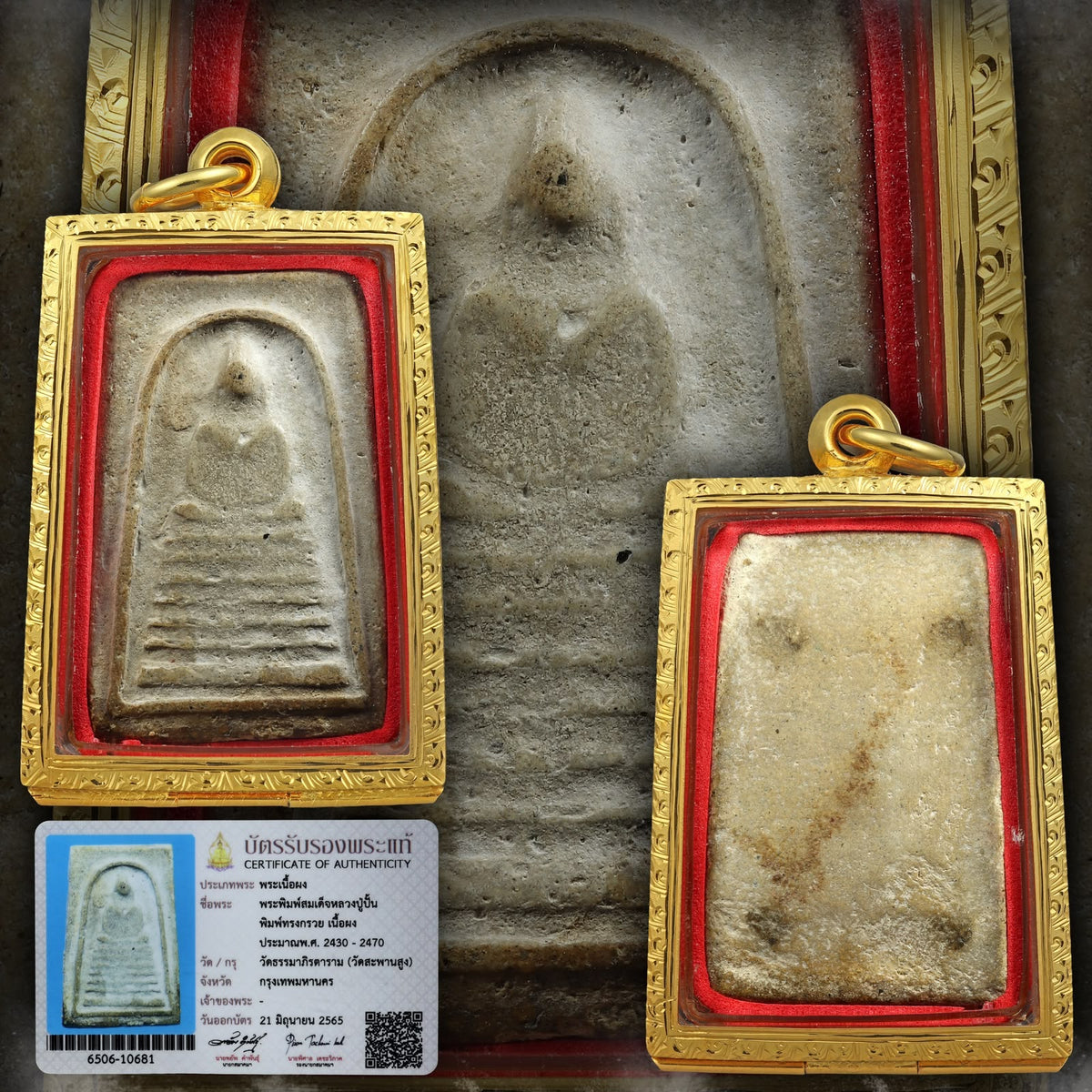
Samakom Certification Card (6506-10681)
Encased in gold box
━━━━━━━━━━━━━━━━━━━━━━━━━━━━━━━━
Sacred Craftsmanship
An early Phra Somdej attributed to LP Pan Supanno, a respected disciple of Somdej Phra Buddhacharn Toh of Wat Rakang. This example belongs to the Pim Kruay Tuen (Shallow Cone Mould), one of the recognised traditional mould variations associated with LP Pan's powder amulets.
Each amulet was individually pressed from prepared sacred powders, resulting in natural variations in texture, colour, surface contraction and mould definition that distinguish one piece from another.
Exact Piece given
━━━━━━━━━━━━━━━━━━━━━━━━━━━━━━━━
Personal Experiences Shared by Luksits
Among collectors of early Thai powder amulets, LP Pan's Phra Somdej has long attracted attention for its close historical association with Somdej Toh and the traditional methods of preparing sacred Buddha powders.
Experienced collectors particularly appreciate the natural ageing, coarse sacred materials and distinctive conical mould. which occasionally led to older examples being mistaken for early Wat Rakang Somdej amulets.
Devotees who follow this lineage traditionally regard LP Pan's creations as objects associated with spiritual protection, personal stability and the cultivation of merit.
This particular example is accompanied by an authenticity certificate issued by a Thai amulet certification organisation, providing an additional documented reference for collectors.
━━━━━━━━━━━━━━━━━━━━━━━━━━━━━━━━
Summary
Phra Somdej LP Pan, Pim Kruay Tuen, is an early Bangkok-period powder amulet traditionally dated to around B.E. 2430 (1887).
Its importance lies in LP Pan's association with Somdej Toh, the use of traditional sacred powder materials and its distinctive shallow conical mould.
LP Pan Supanno as a disciple of Somdej Phra Phutthachan To of Wat Rakhang and attributes his powder amulets to that lineage.
Compared with more commonly encountered Somdej amulets, surviving examples attributed to LP Pan are relatively uncommon, particularly those retaining their original aged surfaces and recognisable mould characteristics.
An appealing historical piece for collectors interested in the early development of Phra Somdej and the spiritual lineage of Wat Rakang.
━━━━━━━━━━━━━━━━━━━━━━━━━━━━━━━━
Historical Background
LP Pan Supanno was a respected monk traditionally recognised as one of the principal disciples of Somdej Phra Buddhacharn Toh.
Although his amulets are commonly identified with Wat Saphan Sung, historical accounts indicate that LP Pan was actually the second abbot of Wat Mai Thong Sen in Bangkok, serving approximately from B.E. 2430 to 2472.
During his tenure, he restored and consolidated the temple grounds, which had previously comprised two separate religious establishments.
The association with Wat Saphan Sung is believed to have originated through Ajahn Jek, a monk of Wat Saphan Sung and disciple of LP Pan, who reportedly distributed his teacher's amulets there.
LP Pan produced several traditional powder amulet designs, including Phra Somdej and Phra Pidta. His Somdej moulds are especially recognised for their resemblance to those associated with Somdej Toh.
His surviving amulets remain valued for their historical connections to the early Wat Rakang tradition.
━━━━━━━━━━━━━━━━━━━━━━━━━━━━━━━━
Origins of the Materials
LP Pan's powder amulets were traditionally prepared using sacred ingredients associated with the teachings of Somdej Toh.
The principal materials are described as:
-
Five Sacred Powders: Traditional auspicious powders associated with Buddhist protective and blessing practices.
-
Shell Lime: A principal binding material used in early Thai powder amulets.
-
Sacred Buddha Powders: Prepared and consecrated powders associated with LP Pan's spiritual lineage.
-
Traditional Sacred Materials: Additional ingredients contributing to the coarse texture and distinctive appearance.
The resulting composition closely resembles certain early Wat Rakang powder amulets, particularly in its aged surface, material density and natural contraction.
━━━━━━━━━━━━━━━━━━━━━━━━━━━━━━━━
Ritual
LP Pan followed the traditional Buddhist consecration practices associated with Somdej Toh's lineage.
The preparation of sacred powders involved the application of Buddhist prayers, sacred formulas and meditative concentration before the materials were pressed into their respective moulds.
The completed amulets were traditionally blessed through chanting and meditation, with emphasis on Buddhist virtues, spiritual protection and the accumulation of merit.
Specific consecration dates for this early production period are not firmly documented.
━━━━━━━━━━━━━━━━━━━━━━━━━━━━━━━━
Blessings and Effects
Within traditional Thai Buddhist belief, LP Pan's Phra Somdej is associated with several auspicious qualities.
-
Protection: Traditionally carried for spiritual safeguarding and reassurance.
-
Metta Maha Niyom: Associated with goodwill, harmonious relationships and favourable interactions.
-
Baramee: Symbolises spiritual authority, personal dignity and accumulated merit.
-
Good Fortune: Believed to encourage favourable opportunities and stability.
-
Wisdom and Composure: A reminder to maintain mindfulness, sound judgement and inner peace.
━━━━━━━━━━━━━━━━━━━━━━━━━━━━━━━━
Modern Application
Suitable for collectors and devotees seeking a traditional Buddhist amulet with a connection to Somdej Toh's spiritual lineage.
It may be worn during daily activities, carried for personal reassurance or preserved as part of a collection of early Thai powder amulets.
Its historical significance also makes it particularly relevant to collectors studying early Bangkok-period sacred craftsmanship.
━━━━━━━━━━━━━━━━━━━━━━━━━━━━━━━━
Physical Details
This example features the traditional Pim Kruay Tuen shallow conical arch surrounding a seated Buddha above multiple stepped bases. The powder body exhibits a naturally aged greyish-white surface with areas of darker discolouration, softened mould details and visible material contraction. The reverse is plain, displaying an uneven aged texture and scattered darker inclusions. The amulet is protected within an ornate gold-coloured casing with a red inner border.
The accompanying certificate identifies the piece as Phra Somdej LP Pan, Pim Kruay Tuen, Wat Saphan Sung, dated to the B.E. 2430–2470 period, with certification issued on 21 June B.E. 2565 (2022).
━━━━━━━━━━━━━━━━━━━━━━━━━━━━━━━━
Recommended Pairing
Phra Somdej Wat Rakang: A historically meaningful pairing reflecting the spiritual lineage connecting Somdej Toh and LP Pan.
Phra Kring: Traditionally associated with well-being, protection and spiritual stability.
Phra Pidta: Complements the protective qualities traditionally attributed to Phra Somdej, particularly in matters of mindfulness and avoiding negative influences.
For collectors, pairing LP Pan's Phra Somdej with an early Wat Rakang-style powder amulet also offers an opportunity to appreciate the similarities in traditional mould design and sacred powder preparation.
━━━━━━━━━━━━━━━━━━━━━━━━━━━━━━━━
Personal Notes
An important distinction concerning LP Pan is the historical confusion surrounding his temple affiliation.
Although collectors commonly refer to these pieces as Phra Somdej LP Pan, Wat Saphan Sung, historical accounts associate his abbacy and amulet production primarily with Wat Mai Thong Sen.
The Wat Saphan Sung attribution appears to have developed through the distribution of his amulets by his disciple Ajahn Jek.
This distinction is worth preserving, particularly when documenting older amulets whose traditional collecting names differ from their historical origins.
The Pim Kruay Tuen remains an interesting example of the early Somdej tradition, valued for its distinctive mould, traditional powder composition and connection to one of the most influential lineages in Thai amulet history.
━━━━━━━━━━━━━━━━━━━━━━━━━━━━━━━━
-
Free Shipping for Singapore| $15 Worldwide | $100 USA All products