
OOBThaiAmulets
LP Pae - Wat Pikulthong
LP Pae - Wat Pikulthong
Couldn't load pickup availability
MS6
Phra Somdej Roon Raek
Pim Teun (shallow mould)
LP Pae | Wat Pikulthong, Singburi
B.E. 2494
Mainstream Artifact
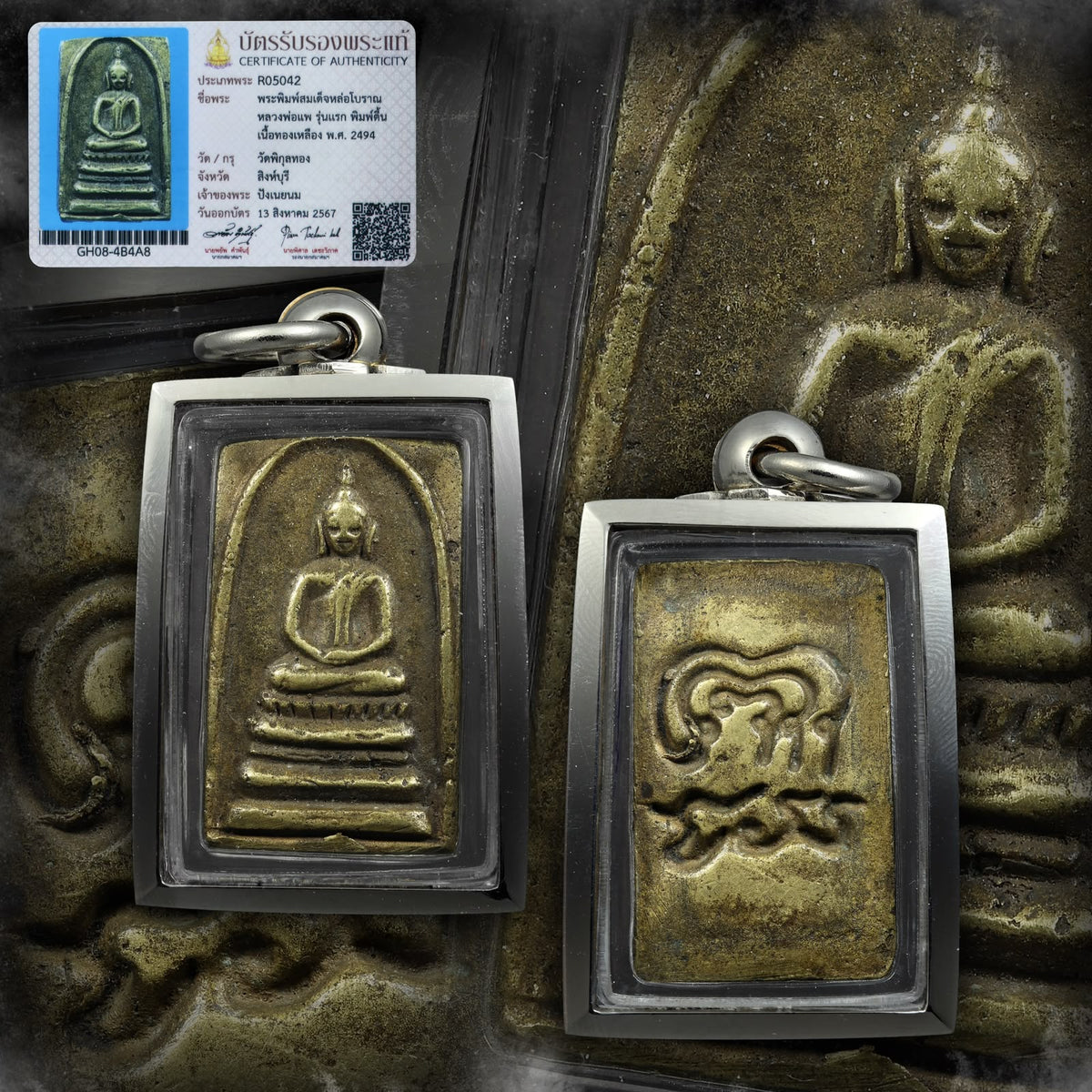
Samakom Certification card (GH08-4B4A8)
━━━━━━━━━━━━━━━━━━━━━━━━━━━━━━━━
Sacred Craftsmanship
The Phra Somdej Roon Raek, Pim Teun (Shallow Mould), B.E. 2494, is one of the earliest and most historically significant metal Phra Somdej editions created by LP Pae Khemangkaro of Wat Pikulthong, Singburi.
Each artifact was individually cast from prepared sacred alloys, with natural variations in texture, patina and casting characteristics making every piece distinctive.
Exact piece to be given
━━━━━━━━━━━━━━━━━━━━━━━━━━━━━━━━
Personal Experiences Shared by Luksits
A Collector's Perspective – Appreciating LP Pae's Early Works
Having collected Thai amulets for many years, I have always regarded LP Pae's early creations as particularly interesting, especially those produced before his Phra Somdej became widely recognised.
What attracts me to this B.E. 2494 Roon Raek is its historical importance. Unlike the later powder editions, this piece was created using traditional casting methods and sacred alloys associated with Wat Suthat.
I particularly appreciate the aged brass surface, natural casting characteristics and the simple, classical Buddha image.
For me, owning an early LP Pae Phra Somdej is not simply about rarity or market value. It is about appreciating an important period in his amulet-making history.
Devotees who wear LP Pae's Phra Somdej commonly associate them with reassurance, protection and Metta Maha Niyom.
A classic first-edition metal Somdej that represents the foundations of LP Pae's celebrated Phra Somdej tradition.
━━━━━━━━━━━━━━━━━━━━━━━━━━━━━━━━
Summary
The Phra Somdej Roon Raek, Pim Teun, B.E. 2494, is an important early metal amulet from LP Pae's extensive Phra Somdej tradition.
Its significance lies in its first-edition status, traditional Lor Boran casting and connection with the renowned Wat Suthat consecration lineage.
Produced in relatively limited quantities and recognised in both shallow and deep mould variations, this edition remains highly regarded among experienced collectors.
The combination of historical importance, sacred alloy composition and traditional craftsmanship makes it one of LP Pae's notable early metal Phra Somdej creations.
━━━━━━━━━━━━━━━━━━━━━━━━━━━━━━━━
Historical Background
LP Pae Khemangkaro (B.E. 2448–2542) was the revered former abbot of Wat Pikulthong, Singburi, widely respected for his Buddhist scholarship, meditation practice and extensive contributions to the local community.
Deeply devoted to Somdej To Phrommarangsi of Wat Rakhang, LP Pae adopted the classical Phra Somdej design as a principal form in his amulet-making tradition.
In B.E. 2494, he commissioned this first-edition cast metal Phra Somdej, with the casting ceremony conducted at Wat Suthat Thepwararam, Bangkok.
The project received the assistance of Chao Khun Sri (Sonth Yatitharo), a respected master associated with Wat Suthat's traditional Phra Kring casting lineage.
Proceeds from the amulet's distribution were intended to support the restoration of Wat Pikulthong, which required substantial repairs during LP Pae's early years as abbot.
━━━━━━━━━━━━━━━━━━━━━━━━━━━━━━━━
Origins of the Materials
The amulet was cast using Nur Thong Pasom, a traditional brass-based sacred alloy incorporating old consecrated metals and auspicious casting materials.
According to collector records, the materials included:
-
Old Wat Suthat Phra Kring casting remnants, contributed through Chao Khun Sri.
-
Phra Kring alloy remnants from Wat Tri Thotsathep.
-
Early Phra Kring materials associated with Somdej Phra Phutthachan Nuam of Wat Anongkharam.
-
Phra Phuttha Chinnarat Indochina and Korean War-era casting remnants from Wat Suthat.
-
Sacred casting materials associated with Wat Ratchabophit.
These materials were reportedly combined during the traditional casting ceremony, following established Wat Suthat practices.
The resulting alloy displays a characteristic aged golden-brown appearance, with natural casting marks and surface oxidation.
━━━━━━━━━━━━━━━━━━━━━━━━━━━━━━━━
Ritual
The casting ceremony was reportedly conducted on Friday, 11 May B.E. 2494 (1951), corresponding to the sixth waxing day of the sixth lunar month.
The ceremony took place at Wat Suthat Thepwararam, Bangkok, under the direction of Chao Khun Sri (Sonth Yatitharo).
Traditional ceremonial procedures were overseen by Lieutenant Sawat Salikup, a ritual specialist associated with Wat Suthat's renowned Phra Kring casting ceremonies.
Following the casting, the amulets were reportedly brought to Wat Chana Songkhram for a major Buddhābhiseka ceremony attended by several respected monks of the period.
Collector accounts associate the ceremony with masters including:
-
Somdej Phra Phutthachan Nuam, Wat Anongkharam.
-
LP Sodh, Wat Paknam.
-
LP Toh, Wat Pradu Chimphli.
-
LP Jong, Wat Natang Nok.
-
LP Chaeng, Wat Bang Phang.
Afterwards, LP Pae reportedly returned the amulets to Wat Pikulthong, where he conducted further individual consecration over an extended period, traditionally described as one Buddhist rains retreat.
This combination of traditional casting, collective blessing and LP Pae's personal consecration forms an important part of the edition's historical significance.
━━━━━━━━━━━━━━━━━━━━━━━━━━━━━━━━
Blessings and Effects
Within traditional Thai Buddhist belief, the Phra Somdej Roon Raek is associated with several principal blessings:
-
Klaew Klaad: Protection from danger, accidents and unforeseen difficulties.
-
Metta Maha Niyom: Encouraging goodwill, popularity and harmonious relationships.
-
Chok Lap: Supporting prosperity, favourable opportunities and financial well-being.
-
Baramee: Representing spiritual merit, authority and personal stability.
-
Kongkrapan Chatri: Traditionally associated with physical protection and resilience.
LP Pae emphasised the importance of observing the Five Precepts, regarding proper conduct as essential to Buddhist practice.
━━━━━━━━━━━━━━━━━━━━━━━━━━━━━━━━
Modern Application
Suitable for everyday wearing by devotees seeking traditional blessings associated with protection, goodwill and spiritual reassurance.
However, given its age, first-edition status and historical importance, this particular Phra Somdej may be especially appreciated as a collector's piece.
It is particularly meaningful for those who collect early LP Pae amulets or traditional Wat Suthat sacred alloy creations.
━━━━━━━━━━━━━━━━━━━━━━━━━━━━━━━━
Physical Details
A rectangular cast-metal Phra Somdej featuring a seated Buddha beneath a classical arch and above a multi-tiered pedestal. This example belongs to the Pim Teun (Shallow Mould) variation, characterised by its relatively shallow relief and traditional casting details. The reverse carries raised sacred inscriptions. Its aged brass-based alloy displays a deep golden-brown patina with natural oxidation and surface variations. The amulet is protected within a waterproof Ah Pook casing with a silver-coloured exterior.
━━━━━━━━━━━━━━━━━━━━━━━━━━━━━━━━
Recommended Pairing
This Phra Somdej may be worn independently as a principal Buddhist amulet, representing LP Pae's early casting tradition and the respected Wat Suthat lineage.
For collectors who appreciate traditional metal amulets, it may be paired with a Phra Kring from Wat Suthat, reflecting the shared casting heritage.
Alternatively, pairing it with a later LP Pae powder Phra Somdej offers an interesting connection between his early metal creations and the subsequent development of his celebrated Phra Somdej series.
━━━━━━━━━━━━━━━━━━━━━━━━━━━━━━━━
-
Free Shipping for Singapore| $15 Worldwide | $100 USA All products