
OOBThaiAmulets
Lp Noi Wat Tamasala
Lp Noi Wat Tamasala
Couldn't load pickup availability
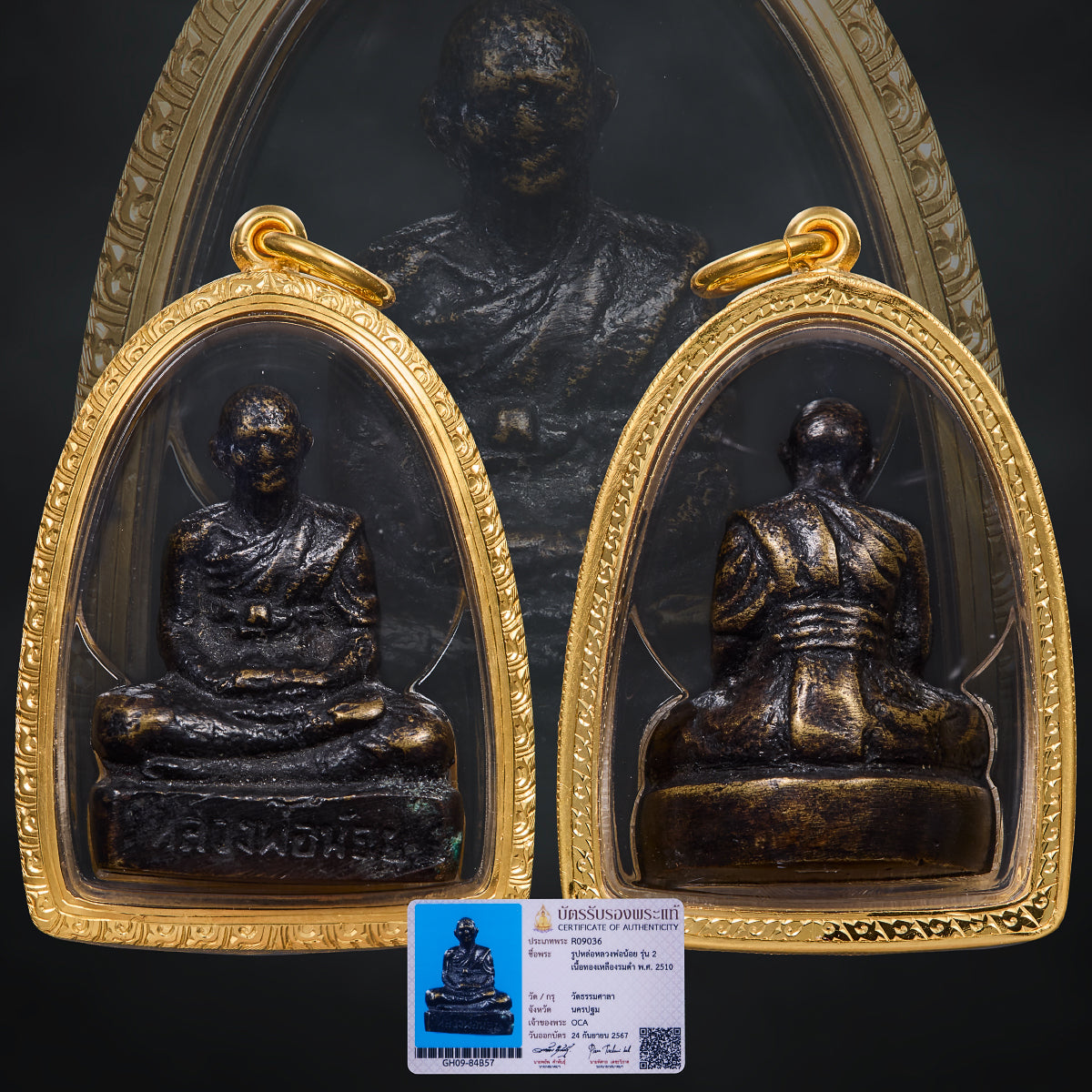
Roop Lor – LP Noi, Wat Thammasala
- Master: LP Noi Inthasaro, Wat Thammasala
- Year: B.E. 2510 (1967)
- Province: Nakhon Pathom
- Material: Tong Lueng (brass)
- Casing: Custom 90% gold
- Category: Mainstream
- Size: Over 1 inch
- Certificate: Samakom
Sacred Craftsmanship
This is an exceptionally rare LP Noi Roop Lor. Before this example, I had dealt with this type only twice; there is simply very little stock in the market. It is a brass monk image from B.E. 2510, housed in custom 90% gold and accompanied by a Samakom certificate.
Personal Experiences Shared by Luksits
The first piece I obtained was around 2014, when I was researching the teachers behind my patron monk, LP Up. I found LP Noi was his main teacher in Vipassana meditation, and that discovery made me want to understand the roots of what I was wearing.
Meditation matters deeply in LP Up's story. In my understanding, it was while he was in north-eastern Thailand that he meditated upon Mae Pim, which is why some Mae Pim batches are associated with Laos or the north-east.
After wearing and venerating LP Noi's items, I felt a definite increase in both my wealth and Baramee. It helped me connect with people of greater standing, and I met many benefactors along the way. For wish granting, I personally place his blessings alongside those of LP Jong, LP Mui and LP Kuay.
Summary
For me, this Roop Lor represents a connection with the teacher behind LP Up's meditation practice. Its rarity matters to collectors, but the lineage and the experiences I have had are what give it meaning to me.
Historical Background
LP Noi Inthasaro was born on 12 May 1883 in the Thammasala area of Nakhon Pathom. He was fully ordained at Wat Thammasala on 28 May 1903, with Phra Ajarn Thong of Wat Lumut as his preceptor, and received the monastic name Inthasaro.
His training included Khmer script, Buddhist study and meditation. His teachers included Phra Ajarn Thong, Phra Kru Primanurak, Phra Kru Thaksinanukit and Phra Samu Saeng. He was remembered for strict discipline, humility and compassion towards people and animals. His legacy is closely connected with meditation and holy-water Wicha. He passed away on 17 November 1970, and a pavilion was later built at Wat Thammasala to enshrine his remains.
Origins of the Materials
The amulet is Tong Lueng, or brass. No more detailed alloy recipe is recorded for this example. Its custom gold casing is separate from the amulet's original material.
Ritual
Besides meditation, LP Noi taught the making of holy water. What can look like a simple ritual carries a deeper significance in this tradition: the ability to bless elemental materials and bring out their essence. That is how I understand the importance of a master's Namon, rather than as evidence of a specific ceremony for this Roop Lor.
Blessings and Effects
My own experience has centred on wealth, stronger Baramee, benefactors and wish granting. These are personal experiences rather than promises of the same outcome for every wearer. The lineage is also associated with meditation and holy-water blessings.
Modern Application
This piece is especially meaningful for devotees of LP Up who want to explore the roots of his training, and for collectors who value older monk images with a wish-granting reputation.
Physical Details
The brass Roop Lor dates to B.E. 2510 (1967), measures over 1 inch, and comes in custom 90% gold with a Samakom certificate.
Personal Notes
The students associated with LP Noi in my original account include LP Ngern of Wat Don Yai Hom, known for his amulets; LP Toh of Wat Pradoochimplee, celebrated for Phra Pidta and meditation; LP Jong of Wat Na Tang Nok, associated with traditional sacred arts; LP Cham of Wat Takong, known for Metta and protection and also a teacher of LP Tae of Wat Sam Ngam; and LP Up of Wat Tong Sai, known for Mae Nang Pim. These lineage associations form part of the account that led me to him.
-
SG: Free | Worldwide except USA: $20 Registered | USA: $25 Registered / $100 Courier (SGD)