
OOBThaiAmulets
LP Lum - Wat Samakeetham
LP Lum - Wat Samakeetham
Couldn't load pickup availability
MS05
Takrut Dai Nam – The Underwater Takrut
LP Lum · Wat Samakeetham
B.E. 2547 (2004)
2 inches
Sacred Craftsmanship
Each sheet was individually prepared and inscribed before being rolled into its tubular takrut form. Natural differences in handwriting, rolling, surface oxidation and dimensions therefore make every surviving example individually distinctive.
Personal Experiences Shared by Luksits
This is one LP Lum piece with which I have a particularly strong personal connection.
When I first began my career in photography, I carried one of these Takrut Dai Nam. At the time, I was still relatively inexperienced and had not yet established the professional network that normally takes years to build.
After I began carrying the takrut, contracts and photography assignments started coming in steadily. New opportunities appeared, customers approached and work developed in ways that allowed my career to progress.
Over the years, I also introduced LP Lum's pieces to customers and collectors. A recurring form of feedback was improvement in business and career circumstances — new clients, smoother opportunities, greater recognition and progress in their existing work.
For me, these practical experiences have always been more important than the extraordinary stories surrounding the consecration. Whatever interpretation one gives to those events, I have valued LP Lum's sacred objects principally for the positive experiences devotees associate with carrying them.
The Takrut Dai Nam remains one of the LP Lum pieces that I personally regard most highly.
Summary
The Takrut Dai Nam B.E. 2547 is an underwater-inscribed tin takrut created by LP Lum according to a difficult traditional method associated with the wicha lineage of LP Suk of Wat Makham Thao.
LP Lum is said to have meditated extensively upon this branch of wicha before producing the batch.
The takrut is traditionally associated with Metta Maha Niyom, Maha Pokasap, wealth, business opportunities, career advancement and Baramee. Among modern devotees, its reputation has become particularly strong amongst those whose livelihood depends upon customers, contracts, professional relationships and a steady flow of opportunities.
Its unusual underwater preparation, individual hand inscription and the remarkable accounts surrounding its consecration have made the B.E. 2547 Dai Nam one of LP Lum's most recognisable sacred objects.
Historical Background
LP Lum belonged to a generation of practitioners who continued to preserve older methods of making takruts individually by hand.
The wicha behind this particular batch is traditionally traced to LP Suk of Wat Makham Thao, one of the celebrated old masters associated with advanced takrut and elemental practices.
LP Lum did not approach the method simply as a design to reproduce. According to accounts surrounding the batch, he spent considerable time meditating upon LP Suk's wicha before undertaking the underwater inscriptions himself.
The ritual was eventually performed in a paddy field, connecting the making of the takrut not only with water but also with cultivated earth and the agricultural landscape upon which livelihood depends.
This gives the Dai Nam an additional symbolic dimension. Water represents movement and adaptability, while the rice field represents food, livelihood, fertility and sustained abundance. Within traditional Thai agricultural spirituality, these ideas naturally complement the takrut's reputation for Maha Pokasap and prosperity.
Origins of the Materials
The principal material used for the B.E. 2547 batch is Debuk, or tin.
Tin can be prepared as relatively thin sheets suitable for sacred inscription and rolling, making it well suited to traditional takrut construction.
What distinguishes this batch is therefore less the rarity of the metal itself than the manner in which LP Lum prepared and empowered it.
Each sheet became the surface upon which the underwater sacred inscriptions were written. Once completed, the metal was rolled into the long tubular form seen in surviving examples.
Symbolically, the construction brings together three elements: earth through the paddy field, water through the underwater inscription, and metal through the Debuk body carrying the sacred writing.
Within the traditional interpretation of the piece, this combination gives the Takrut Dai Nam a particularly grounded character for livelihood, wealth and continued progress.
Ritual
The underwater inscription was only the first stage of the process.
After the takruts had been completed, they were assembled for formal consecration at Wat Samakeetham. It was during this ceremony that the batch acquired its famous reputation as the “Flying Takrut.”
According to accounts preserved by LP Lum's disciples, the rolled takruts were placed upon a ceremonial tray. LP Lum entered concentrated chanting and placed his ritual staff or wand into the arrangement.
Witnesses reported that individual takruts began vibrating, jumping and leaving the tray, with pieces moving towards both sides while LP Lum himself remained seated.
The incident was reportedly photographed by disciples present at the ceremony and became one of the stories most closely associated with this particular batch.
Such accounts belong to the devotional history surrounding LP Lum and are best preserved as the testimony of those who attended the ceremony. For his luksits, the unusual event became an indication of the intensity with which the batch had been consecrated.
Blessings and Effects
The Takrut Dai Nam is traditionally approached primarily for Maha Pokasap and Metta Maha Niyom — supporting wealth and livelihood while encouraging goodwill and favourable treatment from others.
Its reputation is particularly strong for business, attracting customers, securing new work, career advancement and smoother negotiations. Devotees also associate it with recognition in one's profession, stronger Baramee, overcoming business obstacles and maintaining a steady flow of opportunities.
For this reason, the Takrut Dai Nam has remained especially popular amongst business owners, salespeople, professionals and those whose income depends upon relationships, contracts and customers.
Modern Application
The character of the Takrut Dai Nam makes it particularly practical for people building something over time.
A new entrepreneur may carry it while seeking customers and establishing a business. A salesperson may approach it for Metta and easier communication with prospective clients, while a professional may carry it when seeking promotion, recognition, contracts or greater responsibility.
For freelancers and those working independently, its traditional association with incoming work and livelihood is especially appropriate.
The symbolism of water is also meaningful. Rather than meeting every obstacle with force, water finds a route around resistance and continues moving.
In this sense, the Takrut Dai Nam represents not merely wealth, but the ability to keep opportunities flowing and one's livelihood moving forward.
Physical Details
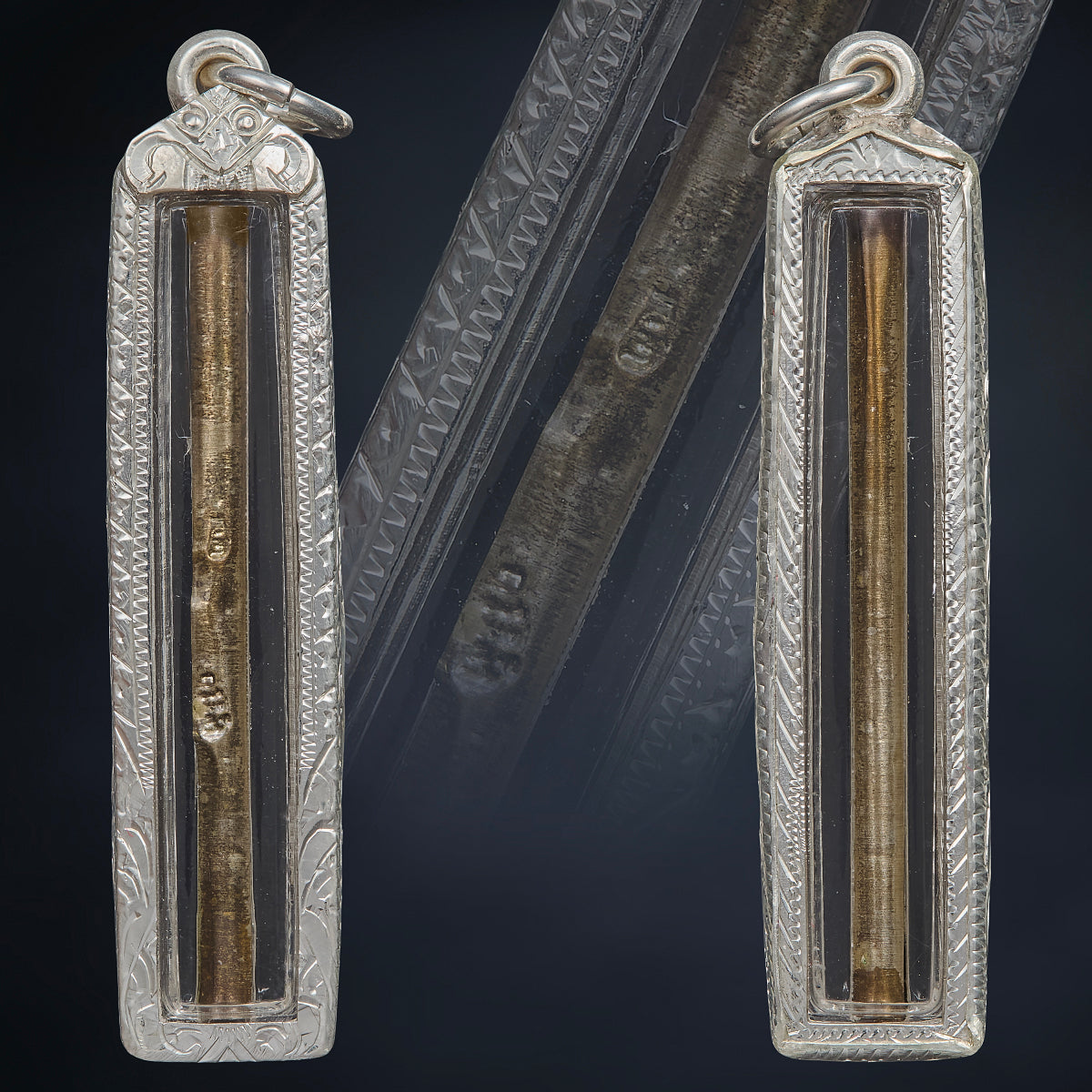
This Takrut Dai Nam was created by LP Lum of Wat Samakeetham in B.E. 2547 (2004) and is made from Debuk, or tin. Each piece was individually hand-inscribed underwater before the metal sheet was rolled into its characteristic long tubular form. The method is traditionally associated with the wicha lineage of LP Suk of Wat Makham Thao.
The example shown retains the simple appearance characteristic of the batch, with the aged tin surface and original rolled construction clearly visible. It is presently housed in a custom single-hook silver casing, allowing the full length of the takrut to remain visible while providing protection suitable for everyday wear.
Recommended Pairing
The Takrut Dai Nam is already a broad and practical standalone piece, particularly for career, wealth and Metta.
For business owners, it pairs naturally with LP Lum's Took Gae. The Took Gae traditionally emphasises calling customers and attracting opportunities, while the Dai Nam supports livelihood, favourable relationships and the continued movement of business.
For stronger authority and leadership, it may instead be combined with a Baramee-oriented amulet. Those seeking a stronger protective foundation may pair it with a traditional Kongkrapan or Klaew Klad piece.
Personal Notes
Among LP Lum's many sacred objects, the Takrut Dai Nam B.E. 2547 is one of the pieces I associate most strongly with the beginning of my own working life.
When these were available at Wat Samakeetham in 2004, a Takrut Dai Nam reportedly cost only around 359 baht. At the time, few could have predicted how strongly LP Lum's pieces would later be sought after by devotees and collectors.
The extraordinary “flying” stories are certainly part of the history of this batch, but they are not the reason I value it.
I carried one when I was still establishing myself in photography. Work came, contracts followed and opportunities gradually opened. Later, I repeatedly heard positive accounts from customers who carried LP Lum's sacred objects for their own careers and businesses.
That practical association is what makes the Takrut Dai Nam significant to me.
It represents an older form of craftsmanship that is increasingly difficult to encounter: a master personally entering the water, holding his breath, writing each sacred inscription by hand and completing the ritual according to the discipline of the wicha he had studied.
For collectors of LP Lum, this is not simply another takrut. It is one of the defining pieces of his lineage.
-
Free Shipping for Singapore| $15 Worldwide | $60 USA For Items Below $350