
OOBThaiAmulets
Lp Im - Wat Hua Kao
Lp Im - Wat Hua Kao
Couldn't load pickup availability
MS04
Phra Naprok
Lp Im - Wat Hua Kao
2.5"
Samakom cert
Each Phra Naprok was individually produced through the old Lor Bolan casting process, in which prepared sacred metals were melted and cast by hand. Natural differences in surface texture, alloy tone, casting marks and form are therefore part of the character of each piece and make every surviving example unique.
Personal Experiences Shared by Luksits
Collectors of LP Im's sacred objects have long associated his amulets with wealth, Metta, business support, protection and the gradual improvement of personal circumstances.
LP Im's amulets are particularly remembered for a balanced character. Wealth and opportunity were traditionally accompanied by protection, personal stability and Metta, allowing the wearer to move through different environments with greater confidence.
For collectors today, much of the attraction lies not only in the age of these amulets, but in the old method by which they were created — beginning with donated sacred materials, continuing through hand casting, and ending with LP Im's own Pluksek.
Summary
This is a Phra Naprok of LP Im of Wat Hua Kao, Suphanburi, created according to the traditional Lor Bolan method of old Thai sacred casting.
Phra Naprok depicts the Buddha seated in meditation beneath the protective hood of the Naga. The image traditionally represents protection, composure, spiritual stability and the overcoming of adverse conditions.
LP Im was particularly respected for preserving older methods of sacred-object production. Rather than separating craftsmanship from consecration, the entire process was regarded as part of the spiritual work.
Prepared metals were melted, cast and finished before the completed sacred image underwent Pluksek, meditation and ritual empowerment.
His amulets subsequently became associated with wealth, Metta Maha Niyom, protection, business prosperity and support during difficult circumstances.
Historical Background
LP Im of Wat Hua Kao in Suphanburi belonged to an older generation of Thai masters for whom meditation, craftsmanship and Wicha were closely connected.
He was remembered for his knowledge of traditional sacred practices transmitted from earlier teachers, including methods of consecration, metal preparation and the creation of ritual objects.
In this older tradition, an amulet was not simply manufactured and later blessed.
The selection of materials, preparation of the furnace, casting process, finishing and final Pluksek could all form part of a continuous religious practice.
LP Im was known for undertaking much of this work within the temple himself. When more delicate craftsmanship was required, skilled artisans could assist with particular stages, while the spiritual preparation and consecration remained under his direction.
This approach reflected an older understanding that the making of a sacred object could itself become an act of concentration, patience and Buddhist devotion.
The Meaning of Phra Naprok
Phra Naprok represents the Buddha protected by the great Naga.
The image recalls the traditional Buddhist account in which the Naga king sheltered the meditating Buddha during severe weather, spreading his hood above him as protection.
For this reason, Phra Naprok became closely associated with shelter, protection and remaining undisturbed while difficulties pass.
Within Thai amulet tradition, this symbolism developed into blessings connected with:
Khum Khrong — protection from harmful circumstances.
Klaew Klaad — avoidance of accidents and danger.
Baramee — personal presence, spiritual strength and stability.
Metta Maha Niyom — goodwill and favourable relationships.
Choke Lap — beneficial opportunities and fortune.
The calm seated Buddha also makes Phra Naprok particularly meaningful for those seeking steadiness of mind when facing stressful or uncertain conditions.
Lor Bolan – Traditional Casting
One of the defining characteristics of LP Im's sacred objects was his use of Lor Bolan, the traditional method of casting sacred images.
The process began by preparing individual models and moulds before different metals were melted together and poured into the form.
Unlike modern industrial production, Lor Bolan naturally produces small variations from piece to piece.
Casting lines, uneven surfaces, differences in metal flow and irregular contours are characteristic of the method and form part of the identity of an old handmade amulet.
LP Im's casting tradition was also closely connected with the ritual preparation of the metals themselves.
Origins of the Sacred Metals
In earlier times, devotees frequently contributed personal metal objects for the creation of temple amulets.
These could include old necklaces, bracelets, silver objects and other pieces of metal offered voluntarily to the temple.
Such contributions carried an additional meaning beyond supplying raw material.
Giving personal valuables represented Dana — generosity. By contributing materials for sacred objects that could later benefit many devotees, the donor was participating directly in the creation of merit.
The different metals were gathered and melted together to form a collective sacred alloy.
Each finished amulet therefore represented not only the ritual work of the master, but also the generosity of the community surrounding him.
Kasin Fai & the Preparation of the Furnace
Accounts surrounding LP Im's casting tradition also connect him with Kasin Fai, meditation upon the fire element.
Within older Thai spiritual practice, elemental meditation required considerable concentration and discipline.
LP Im's followers believed his mastery of the fire element was closely connected with his ability to control and prepare the intense heat required during the casting of sacred metals.
The furnace therefore carried both practical and symbolic importance.
Physically, fire transformed many separate metals into a single casting alloy.
Spiritually, the fire represented purification and transformation, bringing different donated materials together into one sacred form.
Crafting as Buddhist Practice
LP Im's approach to amulet production reflected an older attitude towards sacred craftsmanship.
Performing difficult work slowly and carefully was considered part of the practice itself.
Casting involved heat, physical effort, concentration and patience. Working through each stage without depending heavily upon modern machinery required sustained attention.
For traditional craftsmen and masters, this diligence could become an expression of reverence towards the Buddha, Dhamma and Sangha.
The finished sacred object therefore embodied both physical labour and spiritual intention.
Blessing & Ritual Empowerment
After casting and finishing, LP Im performed ceremony to ritually consecrate the completed sacred objects.
Through meditation, Khata and concentrated intention, the amulets were prepared according to the Wicha he had received from earlier teachers.
Within this tradition, the purpose of consecration was to awaken and strengthen the qualities already present within the sacred materials and final Buddhist image.
The completed Phra Naprok therefore united several stages of preparation:
community-donated metals, traditional Lor Bolan casting, disciplined craftsmanship and final ritual empowerment.
This combination is an important reason older collectors continue to value LP Im's work.
Traditional Blessings & Qualities
LP Im's Phra Naprok is traditionally associated with a broad combination of blessings.
Protection & Klaew Klaad
For safety during travel, work and unpredictable circumstances.
Wealth & Prosperity
Associated with improvement of livelihood, financial opportunities and steady business activity.
Metta Maha Niyom
For goodwill, acceptance, customer relations and smoother interaction with others.
Business Support
Traditionally suitable for merchants, traders and those whose livelihood depends upon regular customers.
Baramee & Stability
For confidence, calmness and maintaining composure under pressure.
Protection from Harmful Influence
The Naga sheltering the Buddha symbolises a strong protective boundary surrounding the devotee.
Modern Application
For modern collectors, this Phra Naprok is particularly suitable for those wanting a balanced sacred object rather than an amulet focused upon only one quality.
Business owners may carry it for prosperity, customer relationships and protection of livelihood.
Professionals may appreciate its association with Baramee, stability and favourable support from others.
Those who travel frequently or work in uncertain environments may particularly value the protective symbolism of the Naga.
For meditation practitioners, the central Buddha image also serves as a reminder to remain composed when external circumstances become difficult.
Physical Details
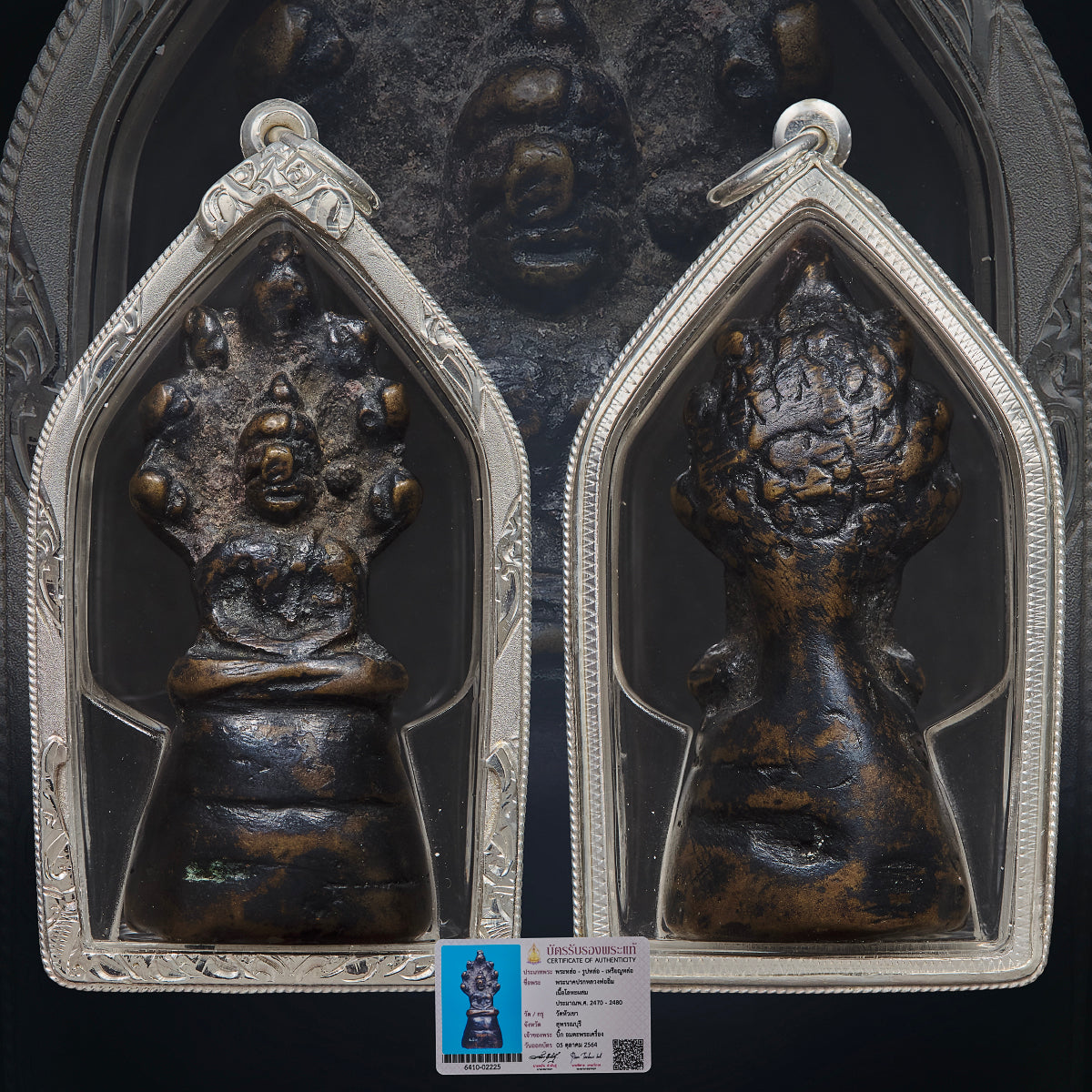
This example presents the Buddha seated beneath a prominent multi-headed Naga canopy, rising above a substantial traditional base.
The old alloy has developed a deep dark patina, with warmer metallic tones naturally appearing across raised areas of the casting.
The reverse retains the sculptural body of the Naga, making the form readable from both sides.
The piece is now protected within a custom silver casing, while the original irregularities of the Lor Bolan casting remain visible throughout.
These irregularities are part of the character of the handmade method rather than flaws in manufacture.
Recommended Pairing
Because Phra Naprok already combines protection, Metta and prosperity, it can comfortably serve as a principal daily amulet.
For business use, it pairs naturally with Nang Kwak, wealth-fetching or Choke Lap pieces.
For greater Baramee and authority, it may be combined with Roop Lors of respected masters.
Those working in hazardous environments may pair it with additional Klaew Klaad or Kong Krapan sacred objects.
Collectors interested specifically in LP Im's lineage may also combine the Phra Naprok with his other traditional cast forms to represent different aspects of his Wicha.
Personal Notes
What makes LP Im's sacred objects particularly interesting is the way their construction reflects an older culture of amulet making.
Community members contributed materials. The master prepared and cast the objects through traditional methods. The physical work itself became part of the devotional process, and the finished pieces were subsequently consecrated through meditation and Wicha.
The result was never intended simply as a decorative collectible.
These amulets were made to be used, carried and relied upon in everyday life.
The Phra Naprok is especially representative of that tradition. Its form speaks of remaining protected while adversity passes, while LP Im's old casting method preserves the physical evidence of the hands, materials and ritual processes involved in its creation.
For collectors who appreciate old Lor Bolan craftsmanship, traditional Wicha and genuinely handmade temple sacred objects, LP Im of Wat Hua Kao remains an important master to study.
-
Free Shipping for Singapore| $15 Worldwide | $60 USA For Items Below $350