OOBThaiAmulets
Lp Derm - Wat Nong Po
Lp Derm - Wat Nong Po
Couldn't load pickup availability
MS7
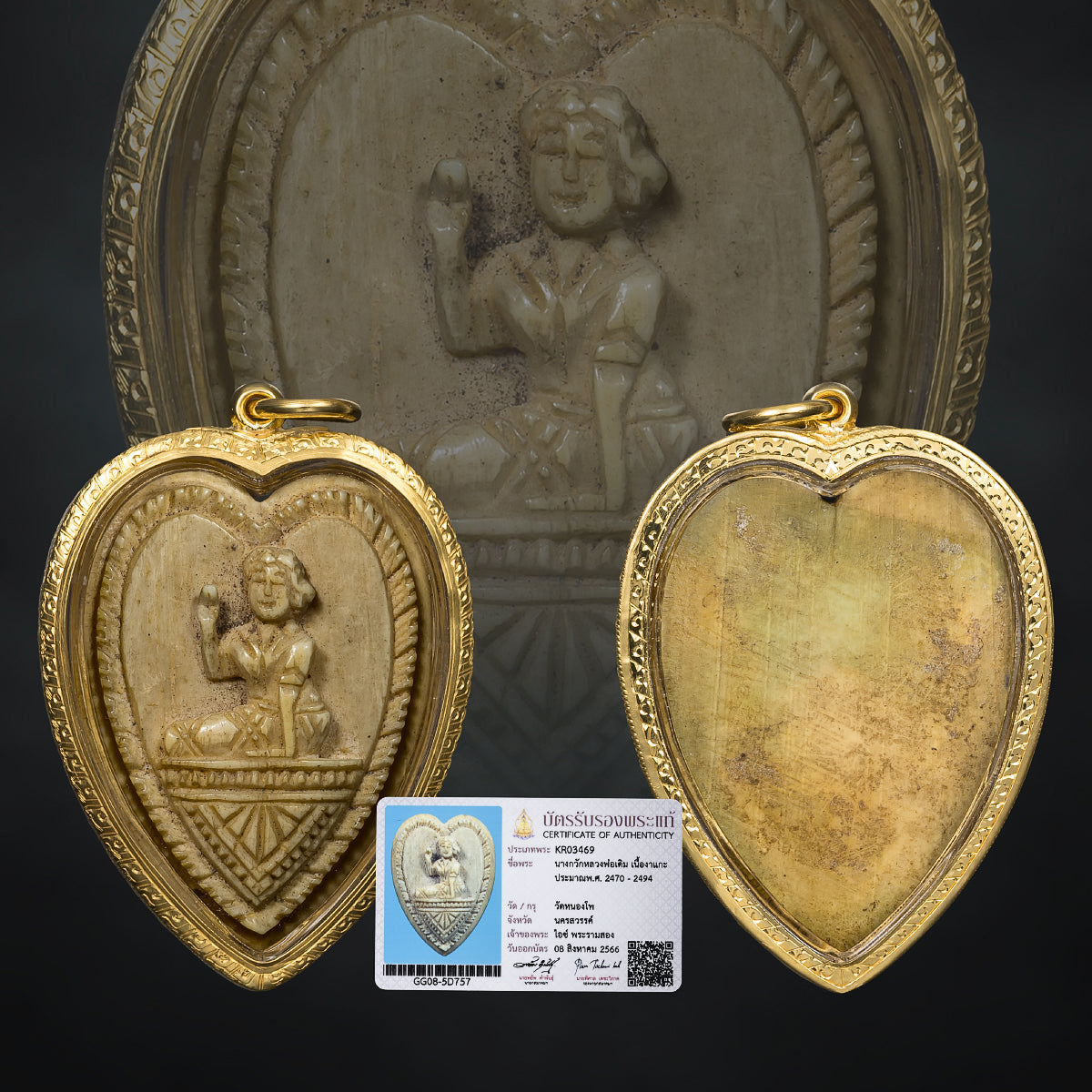
Mae Nang Kwak Pim Hua Jai
LP Derm Phuttasaro | Wat Nong Pho, Nakhon Sawan
B.E. 2470–2494 (1927–1951)
4cm
Mainstream Artifact
Samakom Certification Card (GG08-5D757)
Encased in gold casing
━━━━━━━━━━━━━━━━━━━━━━━━━━━━━━━━
Sacred Craftsmanship
The Mae Nang Kwak Pim Hua Jai is a distinctive heart-shaped talisman associated with LP Derm Phuttasaro of Wat Nong Pho, one of Thailand's most respected masters of traditional Wicha and sacred craftsmanship.
Each artifact was individually handmade from carefully prepared sacred materials. Natural variations in texture, colour, carving details and form make every piece unique.
Exact piece to be given
━━━━━━━━━━━━━━━━━━━━━━━━━━━━━━━━
Personal Experiences Shared by Luksits
Among collectors of LP Derm's Mae Nang Kwak, traditional accounts frequently concern steady customer patronage, smoother business dealings and favourable relationships with customers.
Merchants who favour Nang Kwak often associate the talisman with attracting returning customers, encouraging goodwill and maintaining consistent daily trade.
Collectors of the heart-shaped variation particularly appreciate its prominent beckoning gesture, regarding it as a meaningful representation of Kwak Ngern Kwak Thong — beckoning money and gold.
Others value LP Derm's protective reputation, believing that his Nang Kwak artifacts offer a combination of commercial prosperity, personal confidence and protection during business activities.
━━━━━━━━━━━━━━━━━━━━━━━━━━━━━━━━
Summary
The Mae Nang Kwak Pim Hua Jai is a traditional heart-shaped carving associated with LP Derm of Wat Nong Pho, generally attributed by collectors to approximately B.E. 2470–2494.
Distinguished by its deep-relief Nang Kwak figure, decorative heart-shaped frame and plain reverse, this variation represents an unusual form within the master's traditional talismanic repertoire.
Historically appreciated among merchants and traders, it is associated with Metta Maha Niyom, customer attraction, Maha Lap and commercial prosperity.
Its individually carved construction and distinctive design contribute to its significance among collectors of older Thai sacred artifacts.
━━━━━━━━━━━━━━━━━━━━━━━━━━━━━━━━
Historical Background
LP Derm Phuttasaro (B.E. 2403–2494) of Wat Nong Pho, Takhli District, Nakhon Sawan, was among Thailand's most respected monks of his generation.
Widely revered as the “God of the City of Four Rivers”, he was renowned for his knowledge of Buddhist practice, traditional Wicha and the preparation of protective sacred objects.
His reputation extended throughout central Thailand, particularly among merchants, travellers and rural communities seeking blessings for protection, prosperity and safe journeys.
LP Derm was especially recognised for his Mit Mor ritual knives, Roop Lor images, hand-carved talismans and protective artifacts.
Historical accounts describe his fondness for elephants and horses, which played important roles in transportation and rural life during his lifetime.
His close relationships with local craftsmen and devoted disciples contributed to the preparation of numerous individually carved sacred objects.
Around B.E. 2470 (1927), hand-carved talismans associated with LP Derm became increasingly appreciated among disciples who lived or travelled far from Wat Nong Pho.
Mae Nang Kwak was particularly favoured by merchants because of her traditional association with customer attraction, favourable trade and financial prosperity.
LP Derm passed away on 22 May B.E. 2494 (1951), aged approximately 91–92, leaving an enduring legacy within Thai Buddhist and talismanic traditions.
━━━━━━━━━━━━━━━━━━━━━━━━━━━━━━━━
Origins of the Materials
The Mae Nang Kwak Pim Hua Jai reflects the traditional practice of preparing individually carved sacred objects using materials selected for their suitability for detailed craftsmanship.
According to historical collector accounts, materials were sometimes provided by disciples, while others were obtained through craftsmen familiar with the preparation of traditional talismans.
The material was carefully shaped into a heart-shaped form, allowing the craftsman to define the facial features, seated posture, raised beckoning hand and decorative lower platform.
The Payuhakhiri carving tradition, associated with craftsmen from the Nakhon Sawan region, is frequently mentioned in connection with these older hand-carved artifacts.
Unlike standardised moulded amulets, these pieces were individually worked, resulting in differences in facial expressions, proportions, carving depth and decorative detailing.
Over time, older examples may develop natural colour changes, surface patina and fine age-related lines.
━━━━━━━━━━━━━━━━━━━━━━━━━━━━━━━━
Ritual
The Mae Nang Kwak Pim Hua Jai is traditionally associated with LP Derm's established Buddhist chanting and protective Wicha practices.
Historical accounts describe disciples commissioning hand-carved talismans and presenting them to LP Derm for consecration and blessings before carrying them during business activities or travelling.
The principal emphasis of Mae Nang Kwak was Metta Maha Niyom and commercial prosperity, reflecting her traditional role in attracting customers and favourable opportunities.
LP Derm's broader protective Wicha was also believed to provide blessings for Klaew Klaad, safe travel and protection against harmful influences.
These older hand-carved artifacts were not necessarily produced in a single documented batch.
The period B.E. 2470–2494 therefore represents an approximate historical attribution rather than a confirmed production schedule or specific consecration ceremony.
━━━━━━━━━━━━━━━━━━━━━━━━━━━━━━━━
Blessings and Effects
-
Kwak Ngern Kwak Thong: Traditionally associated with attracting money, customers and commercial opportunities.
-
Metta Maha Niyom: Encourages goodwill, popularity and favourable treatment from others.
-
Business Prosperity: Sought for smoother trading, customer patronage and steady income.
-
Maha Lap: Associated with fortunate opportunities and improvements in financial circumstances.
-
Support from Superiors: Traditionally believed to encourage assistance, kindness and favourable relationships with influential people.
-
Klaew Klaad and Protection: Associated with protection against danger, misfortune and harmful influences.
-
Smooth Negotiations: Sought for favourable communication, business agreements and lasting commercial relationships.
━━━━━━━━━━━━━━━━━━━━━━━━━━━━━━━━
Modern Application
The Mae Nang Kwak Pim Hua Jai remains particularly meaningful to business owners, merchants, sales professionals and individuals working in customer-facing occupations.
Her traditional symbolism reflects the importance of attracting customers, maintaining goodwill and encouraging commercial opportunities.
The distinctive heart-shaped design also makes this variation appealing to collectors who appreciate unusual forms of traditional Thai craftsmanship.
For devotees involved in business and negotiations, Nang Kwak is associated with approachability, favourable communication and long-term customer relationships.
Beyond its traditional blessings, the artifact preserves an important connection to the devotional practices and merchant culture associated with LP Derm's period.
━━━━━━━━━━━━━━━━━━━━━━━━━━━━━━━━
Physical Details
The artifact features a distinctive heart-shaped form, with Mae Nang Kwak seated in deep relief at the centre, her right hand raised in a beckoning gesture. The figure is surrounded by a recessed background and decorative inner border, while the lower section displays a geometric pattern extending towards the pointed base of the heart. The reverse is plain and uncarved, showing natural surface variations, warm yellowish tones and areas of darker patina. The photographed example is enclosed in an ornate gold-coloured protective casing, with a suspension loop and transparent covers on both sides. A Thai authentication card is shown alongside the artifact.
━━━━━━━━━━━━━━━━━━━━━━━━━━━━━━━━
Recommended Pairing
LP Derm Roop Lor: Traditionally associated with Baramee, authority, protection and personal confidence, complementing Nang Kwak's commercial attraction symbolism.
LP Up Mae Pimpa: A complementary pairing for those seeking additional emphasis on Metta Maha Niyom, attraction, customer goodwill and harmonious relationships.
━━━━━━━━━━━━━━━━━━━━━━━━━━━━━━━━
Personal Notes
The Mae Nang Kwak Pim Hua Jai is particularly interesting because of its larger heart-shaped design and deeply carved central figure, distinguishing it from the more conventional pointed-arch variations.
The clearly defined beckoning hand, facial features and decorative lower platform reflect the attention given to individual craftsmanship.
Within traditional Thai merchant culture, Nang Kwak has long represented the hope for steady customers, favourable business opportunities and sufficient daily income.
The heart-shaped variation preserves this familiar symbolism while presenting it in a distinctive form associated with older hand-carved talismans.
For collectors of LP Derm, the Pim Hua Jai remains an interesting expression of Metta Maha Niyom, Maha Lap and traditional Thai sacred craftsmanship, with historical attribution and authenticity requiring careful individual assessment.
━━━━━━━━━━━━━━━━━━━━━━━━━━━━━━━━
-
SG: Free | Worldwide except USA: $20 Registered | USA: $25 Registered / $100 Courier (SGD)