
OOBThaiAmulets
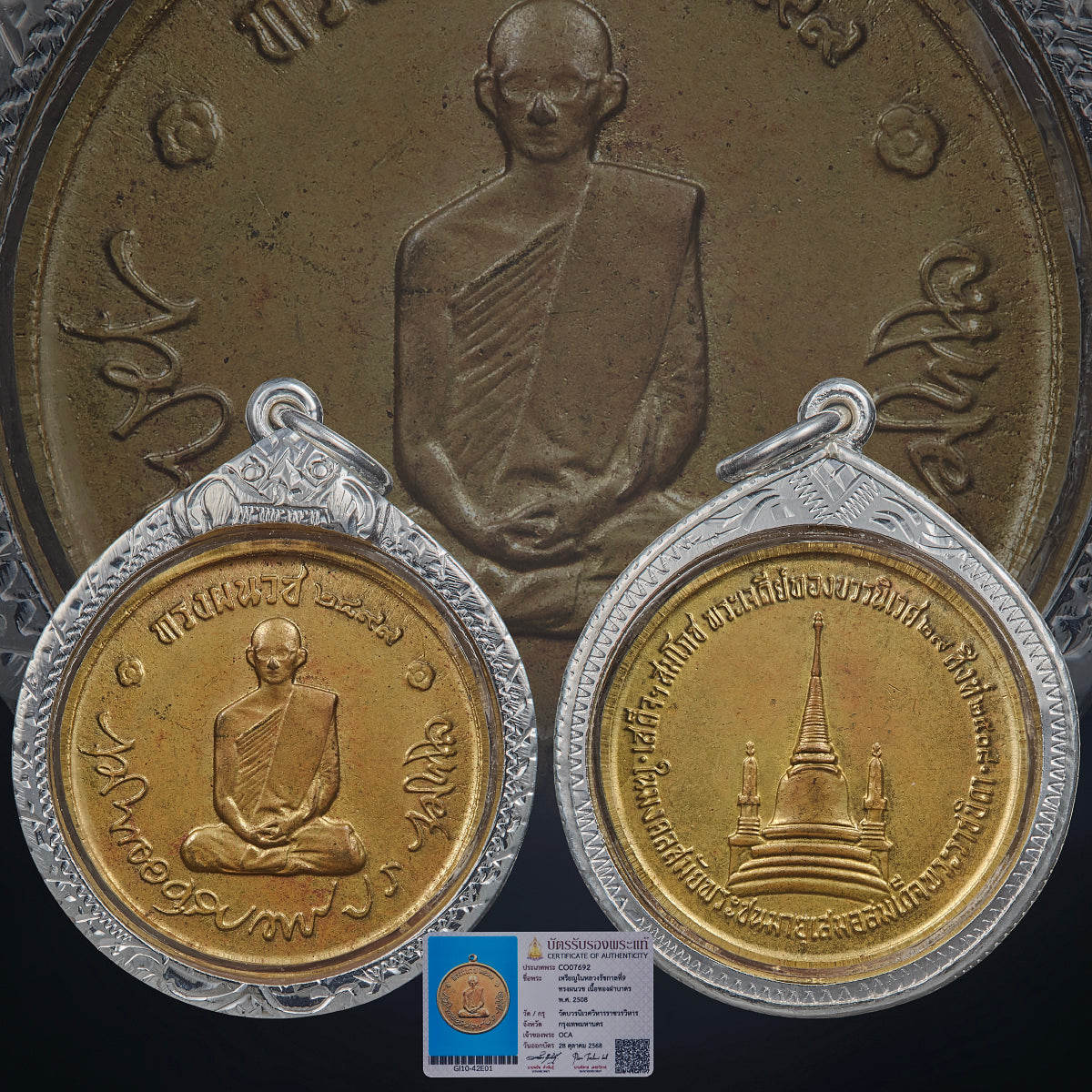
King Bhumibol Rian Song Phanuat 2508 Wat Boworn
King Bhumibol Rian Song Phanuat 2508 Wat Boworn
Couldn't load pickup availability
MS1
Summary
The BE 2508 Royal Monkhood Coin from Wat Bowonniwet Vihara remains one of the most respected royal commemorative amulets ever created during the reign of King Bhumibol Adulyadej. Among serious collectors, this is not simply viewed as a commemorative medal. It represents an era of dignity, discipline, compassion, royal responsibility, and Buddhist kingship closely tied to the image of King Rama IX during his monkhood period.
Although commonly called the “Royal Monkhood Coin,” the medal itself was not created during His Majesty’s ordination in BE 2499. It was officially issued nine years later in BE 2508 during the grand “Jaturongkamongkol” royal merit-making ceremonies held when the King reached the same age as his late father, Prince Mahidol Adulyadej.
For many older Thai collectors, this coin carries a very unique atmosphere. The energy associated with it is often described as calm authority, protective metta, stability, and the type of respect naturally given to a leader who carries responsibility over many people.
This has personally been one of my dream royal pieces for many years.
The solid gold version has now reached valuations exceeding SGD $180,000 among serious collectors and high-end royal memorabilia circles. Because of this, the “Tong Fabat” version became the piece I gravitated towards over the years. The feeling and symbolism behind it remain deeply powerful. The fatherly metta, composed authority, and leadership energy associated with King Rama IX are still very present within the piece itself.
For businessmen, company directors, senior management, or individuals responsible for leading teams, this is one of those classic Thai royal amulets that carries a very grounded form of baramee.
Historical Background
In BE 2508, Wat Bowonniwet organised four major auspicious royal ceremonies connected to King Bhumibol Adulyadej reaching the same age as his father, Prince Mahidol Adulyadej, Prince of Songkla. The date became recognised as one of the important royal merit occasions of the era.
During this period, His Majesty personally performed four major acts of merit and public charity collectively known as the “Jaturongkamongkol,” meaning the Fourfold Auspicious Ceremony.
To commemorate this historic occasion, Wat Bowonniwet sought royal permission to create a commemorative medal featuring the King during his monkhood. The portrait used was based on the official royal photograph taken during His Majesty’s ordination in BE 2499.
Beneath the portrait appears the royal signature inscription:
“Bhumibol Adulyadej P.R. Phumiphlo”
This signature was reproduced directly from His Majesty’s handwritten signature recorded within the official temple registry book of Wat Bowonniwet.
Above the portrait are the words:
“Ordained 2499”
The reverse side features the golden chedi of Wat Bowonniwet Vihara surrounded by a commemorative inscription marking the royal ceremonies held on 29 August BE 2508.
For many Thai Buddhists, the combination of the monkhood portrait together with the chedi of Wat Bowonniwet created a piece that symbolised both spiritual discipline and royal duty at the same time.
Royal Ceremonies and Consecration
All versions of the medal entered a major Buddhist consecration ceremony held on 27 August BE 2508.
King Bhumibol Adulyadej personally attended and participated in multiple royal merit ceremonies throughout the event period. One of the important ceremonies included the casting of the “Phor Por Ror” Buddha image together with additional acts of royal charity and merit-making.
The Buddhist consecration ceremony continued throughout the night.
Five full groups of highly respected monk-chanters participated in the blessing ceremony, with eight monks seated in each group. Many of Thailand’s most respected masters of the era were present, including:
-
Somdet Phra Nyanasamvara
-
Luang Pu Dee
-
Luang Pu Toh
-
Ajarn Nam
-
Luang Por Ngern
Because of the royal significance, the scale of the ceremony, and the calibre of masters involved, the first-generation Royal Monkhood Coin eventually became one of the most respected royal Buddhist medals in Thailand.
Variations and Materials
The medal was produced in both worship-format and wearable pendant versions.
Large worship-format pieces measuring approximately 9 cm were created in silver, copper, and Tong Fabat alloy. The Tong Fabat worship versions reportedly had very limited production numbers.
The wearable versions were produced in gold, silver, copper, alpaca alloy, and Tong Fabat alloy.
Collectors generally separate the reverse dies into two recognised variations:
-
Standard Block
-
Niyom Block
The Niyom variation can be identified through a small curved indentation near the suspension loop area.
As the medals were officially struck by the Royal Thai Mint, the details remain exceptionally sharp with strong die definition and refined edge finishing.
Blessings and Modern Application
Among many senior Thai businessmen and older collectors, royal monkhood medals have long been associated with calm authority, leadership, public respect, and stabilising energy.
This is not the aggressive type of authority associated with force or domination.
The atmosphere surrounding this piece feels closer to the image of a respected father figure, mentor, senior executive, or leader whom others naturally trust and listen to.
Over the years, I have noticed many management-level individuals gravitating toward royal-themed amulets of King Rama IX, especially pieces connected to merit-making ceremonies and monkhood imagery. The energy feels composed and steady. In meetings, negotiations, or leadership environments, it creates a subtle sense of reliability and emotional control.
For those managing staff, overseeing businesses, leading sales teams, or handling major responsibilities, this remains one of the classic royal Thai amulets that continues to carry strong appeal across generations.
Personal Notes
The Tong Fabat version has always stood out to me because it still carries the elegance and atmosphere of the original series while remaining wearable and practical for daily use.
Every time I look at the portrait, there is a sense of calmness and discipline associated with the era of King Rama IX. The monkhood image itself carries tremendous symbolic weight in Thai Buddhist culture. It reflects humility, self-discipline, merit, and responsibility despite holding the highest position in the country.
Among royal commemorative amulets, this remains one of the pieces I personally feel every serious collector should experience at least once in hand.
-
Free Shipping for Singapore| $15 Worldwide | $60 USA For Items Below $350