
OOBThaiAmulets
Hua Namo
Hua Namo
Couldn't load pickup availability
MS6
Hua Namo – Wat Mahathat, Nakhon Si Thammarat
B.E. 2547
Personal Notes
Hua Namo is one of the few Southern Thai sacred objects whose reputation extends well beyond ordinary collectors. For generations, it has been carried not only by everyday devotees, but also by members of royalty, senior government officials, military officers and prominent business figures who value its long-standing association with protection, auspiciousness and opportunity.
Early Hua Namo from respected lineages have become highly sought after by collectors, with desirable older examples often commanding prices of S$5,000–6,000 or more. This B.E. 2547 lineage offers collectors the opportunity to own a piece blessed during one of the most respected consecration periods of the 2540s, with the participation of Ajarn Khun Pan, Ajarn Ko Pong and Luang Nui, together with an extensive monastic blessing tradition.
Another feature that makes this piece especially practical is its size. Measuring approximately 0.8 cm, it can be attached almost anywhere without being intrusive. Many owners wear it as a discreet pendant, while others attach it to a necklace as a side charm, a keychain, a handbag, a wallet or even place it inside a car or on an office desk.
Its compact form allows the blessings to accompany you throughout the day without requiring a dedicated amulet case, making it an exceptionally versatile sacred object for both collectors and everyday wearers.
For such a small piece, Hua Namo carries an extraordinary history—one that has been treasured in Southern Thailand for centuries and continues to be sought by those hoping for protection, favourable opportunities and the quiet good fortune that seems to arrive at exactly the right moment.
Summary
After wearing this amulet, many whom collect pieces from this Wat Mahathat blessing lineage experienced an unusual combination of luck, protection and opportunities opening at precisely the right moment—a business negotiation unexpectedly turning in their favor, an influential person deciding to help, a dangerous situation narrowly avoided, or a career opportunity appearing when advancement had previously seemed impossible.
For someone chasing a pay raise, promotion, important contract or breakthrough in business, Hua Namo is especially attractive because its traditional reputation is not limited to one specific blessing. In Nakhon Si Thammarat belief, Hua Namo has long been regarded as an almost “all-encompassing” sacred object, associated with Metta Maha Niyom, good fortune and Klaew Klaad protection.
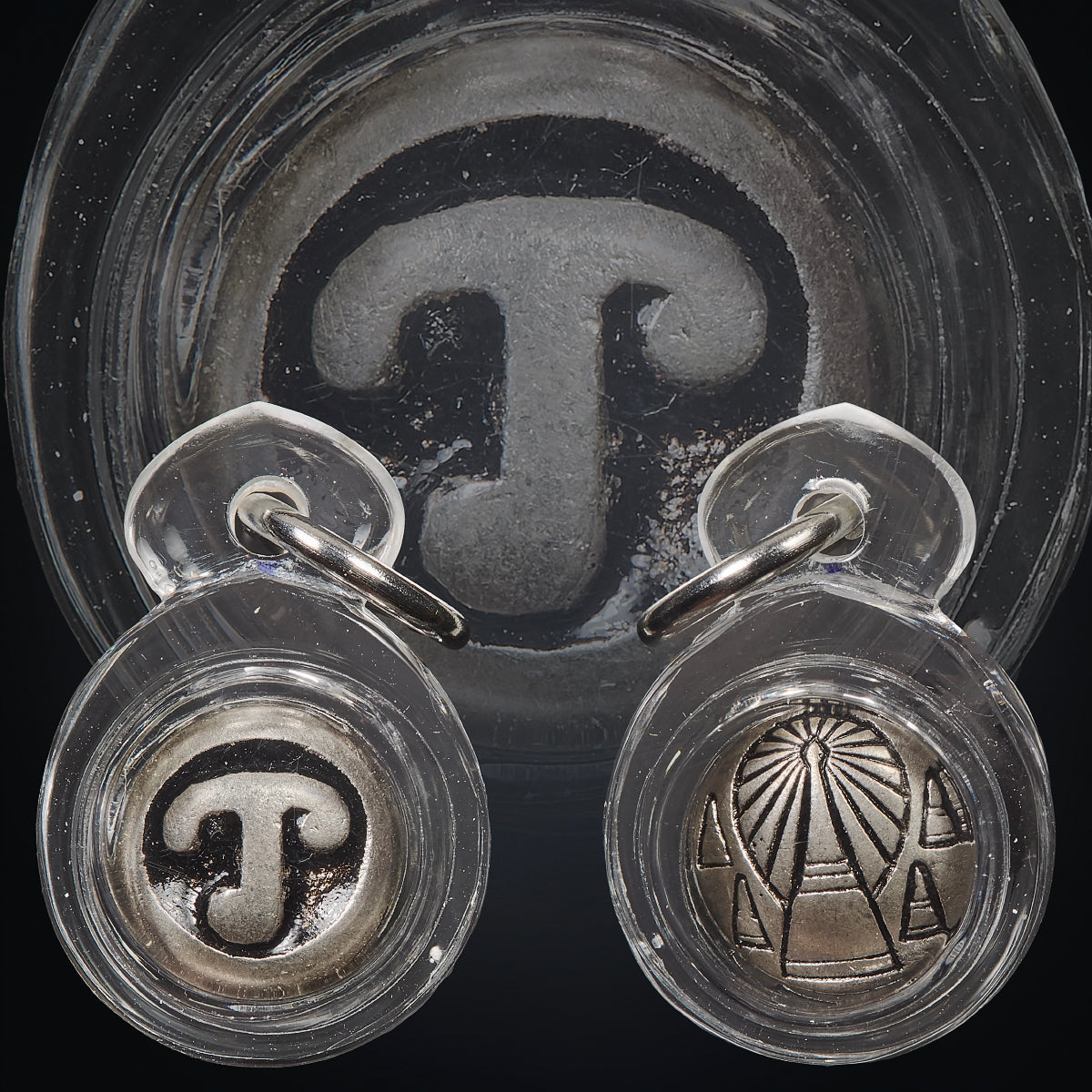
This particular piece is not the Hua Namo necklace shown on the reference page. It is an individual Hua Namo amulet, encased separately for wearing. The front carries the unmistakable sacred “Na” glyph, while the reverse depicts Wat Mahathat, directly connecting the piece visually with the spiritual heart of Nakhon Si Thammarat.
The reference B.E. 2547 Wat Mahathat lineage is described as having undergone an unusually extensive consecration involving Ajarn Khun Pan, Luang Nui and Ajarn Ko Pong, together with more than 108 monks participating in chanting during the Buddhist Lent period.
Historical Background
Hua Namo is much older than the modern Thai amulet market.
Its history is intimately connected with Nakhon Si Thammarat, where Hua Namo has been known for centuries. Historical and cultural sources describe the original Hua Namo as small metal objects associated with the ancient Tambralinga/Nakhon Si Thammarat region and bearing a character derived from Pallava, an ancient Indian script.
According to the famous local tradition, during an epidemic, King Si Thamma Sokarat had Hua Namo ritually consecrated according to Brahmanical rites and scattered around the city. The epidemic was believed to have subsequently subsided. The tradition became so deeply embedded in Nakhon Si Thammarat culture that Hua Namo developed from an ancient monetary/sacred object into one of the region's characteristic protective talismans.
Local accounts even relate that when another cholera outbreak occurred during the reign of King Rama IV, Hua Namo were again consecrated and scattered according to the old tradition.
It is therefore important to understand Hua Namo as more than simply another modern amulet design.
It represents a Southern Thai protective tradition extending back many centuries.
Origins of the Materials
Traditional Hua Namo were small metal objects, often described as being made from mixed metal or bronze-like alloys. Their defining feature was not an elaborate Buddha image but the sacred character impressed upon the metal.
The reference B.E. 2547 Wat Mahathat series also includes Hua Namo pieces produced in silver for wearable forms. The original reference listing describes its necklace version as pure silver, with the individual Hua Namo units carrying the sacred Na character.
The importance of the metal is therefore inseparable from the Na impressed upon it.
Rather than treating the character as decoration, Southern Thai wiccha regards the sacred syllable as a concentrated spiritual code—an extremely compact representation of mantra and blessing.
This is one reason such a small object can carry such a large reputation.
Ritual
The B.E. 2547 Wat Mahathat lineage is particularly interesting because the reference history describes a prolonged consecration rather than a brief blessing ceremony.
According to the lineage information supplied for the Wat Mahathat Hua Namo series, Ajarn Khun Pan, Luang Nui and Ajarn Ko Pong participated in its blessing. The ritual reportedly continued throughout the Buddhist Lent period, with more than 108 monks participating in daily and nightly chanting and a cycle involving 108 sacred kathas.
Within that tradition, the purpose was to combine several dimensions of blessing rather than producing an object intended for only one narrow effect.
Protection.
Luck.
Metta.
Baramee.
Authority.
Opportunity.
Wealth.
The Hua Namo therefore becomes almost like a compressed yantra: a very small sacred object carrying a remarkably broad spectrum of traditional intentions.
Blessings and Effects
The traditional reputation of Hua Namo is unusually broad. Nakhon Si Thammarat sources specifically associate it with protection against danger and illness, Metta Maha Niyom, good fortune and Klaew Klaad.
The B.E. 2547 lineage further emphasizes protection, wealth generation and enhancement of luck, with the Na symbol understood as carrying concentrated sacred qualities.
For the modern wearer, this translates particularly well into three areas.
Money and opportunity: wear it when asking for the chance that changes your financial position—the unexpected customer, successful negotiation, new job, commission, contract or promotion.
People and authority: its Metta aspect is traditionally sought when you need decision-makers, customers, employers or influential people to view you favorably.
Protection: its ancient reputation remains deeply connected with avoiding danger and surviving periods of uncertainty.
This makes Hua Namo particularly attractive for someone who does not want to wear five different amulets for five different purposes.
It is traditionally regarded as a multi-purpose sacred object.
Modern Application
Imagine being overlooked for promotion year after year.
Your work is good, but the right person never seems to notice it.
You begin wearing Hua Namo before an important period at work. Soon afterward, a senior manager unexpectedly notices a project you completed. You are invited into a meeting you normally would not attend. That meeting leads to greater responsibility, and several months later the responsibility becomes a promotion and meaningful increase in salary.
Was it the amulet?
That remains a matter of faith.
But that is precisely the type of experience for which collectors seek Hua Namo: circumstances aligning so naturally that the result almost feels impossible in hindsight.
The same principle applies to business. Wearers may seek Hua Namo before pitching a major client, opening a new shop, negotiating a contract or asking someone influential for assistance.
The desired effect is not simply money appearing from nowhere.
It is being in the correct place, meeting the correct person and receiving the correct opportunity at exactly the right moment.
For someone interested in lottery or windfall luck, Hua Namo's traditional association with Chok Lap makes it relevant as a general luck enhancer, although it should not be represented as guaranteeing gambling outcomes.
Sometimes the greatest windfall is not a winning ticket.
It is one telephone call that changes your income for the next ten years.
Physical Details
This example is an individual Hua Namo amulet, not a necklace.
The front displays the characteristic Na symbol in raised relief against a dark recessed background. The bold simplicity of the design closely follows the visual identity that has made Hua Namo immediately recognizable in Southern Thailand.
The reverse is especially attractive because it depicts Wat Mahathat, represented by the central stupa with radiating lines above and subsidiary architectural forms around it.
That reverse design gives the piece an immediately recognizable connection to its Wat Mahathat, Nakhon Si Thammarat lineage.
Recommended Pairing
Hua Namo is already unusually broad in its traditional blessings, so it does not necessarily require another amulet. However, pairing can be used when the wearer has one very specific objective.
For promotion, salary increase and authority, pair Hua Namo with Maha Amnaj or Baramee. Hua Namo attracts favorable circumstances and Metta; Maha Amnaj strengthens authority and recognition.
For business and sales, pair it with Nang Kwak or a strong Metta Maha Niyom piece. The combination is intended to bring the right people toward you and make those people more receptive once they arrive.
For lottery and unexpected money, combine it with a dedicated Chok Lap / Lap Loi amulet. Hua Namo supplies the broad auspicious foundation while the companion piece concentrates specifically on windfall luck.
For protection, pairing Hua Namo with Takrut Kasatorn creates a particularly interesting combination: Hua Namo for opportunity, luck and Metta; Kasatorn for pushing away obstacles and danger.
In simple terms:
Hua Namo helps the right things find you—and helps the wrong things pass you by.
Personal Notes
What makes Hua Namo compelling is that its story does not begin with modern claims of wealth or lottery winnings.
Its reputation begins with an ancient Southern Thai belief in survival during catastrophe. Over generations, that protective reputation expanded into Metta, luck, prosperity and general auspiciousness.
The B.E. 2547 Wat Mahathat lineage adds another layer. The reference history records that Hua Namo from this cycle became particularly associated with people in positions where authority, protection and advancement mattered—including civil servants, police and military personnel, as well as businessmen pursuing opportunities outside Nakhon Si Thammarat.
the extraordinary piece of luck that creates an opportunity they could never have created by themselves.
When the right person suddenly says yes, the contract finally lands, the promotion arrives, or you walk unharmed from something that could have ended very differently, that is the kind of Hua Namo experience that can feel just shy of a miracle.
-
Free Shipping for Singapore| $15 Worldwide | $60 USA For Items Below $350