Summary
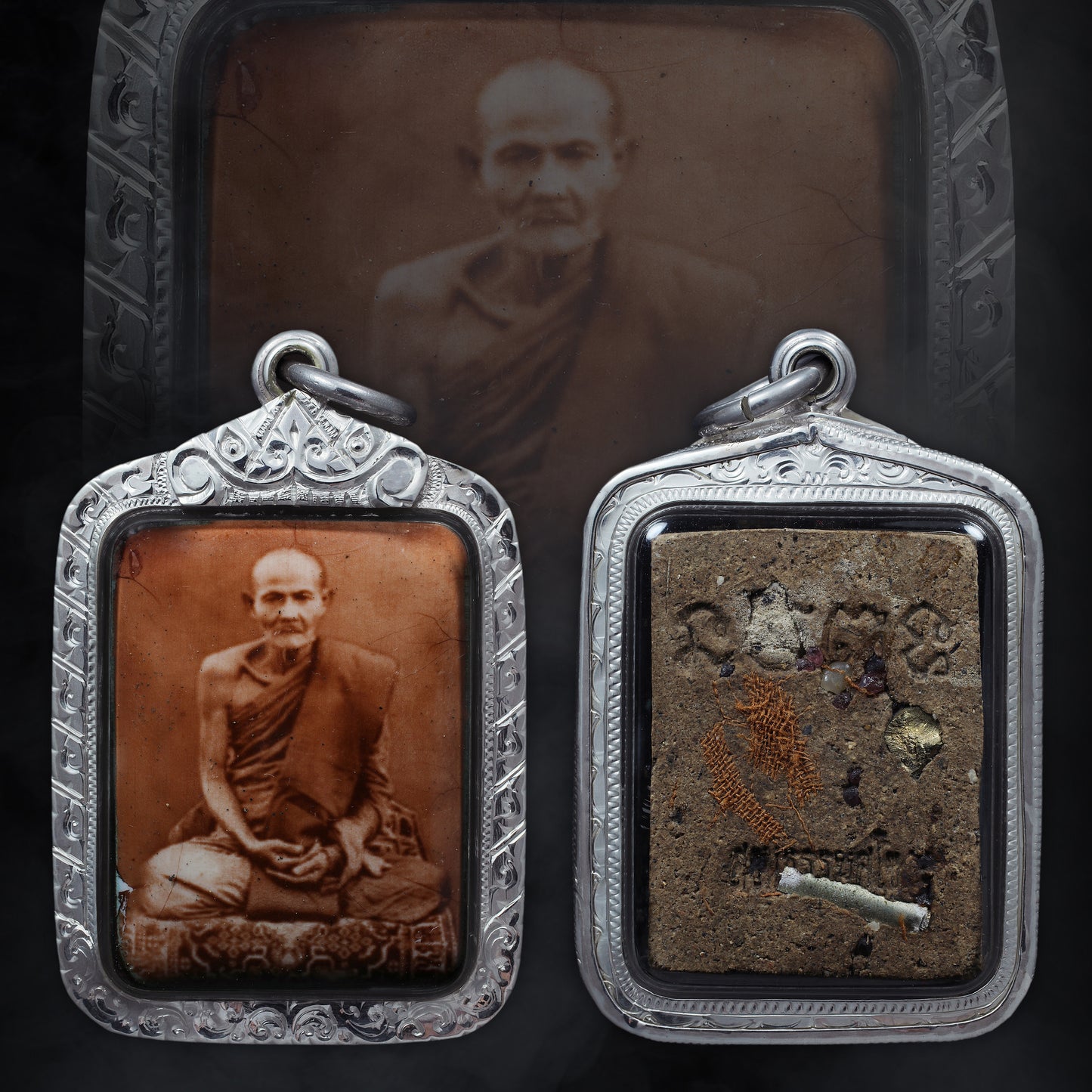
This forest lineage locket was consecrated by Arjan Pirat, a practitioner within the lineage of Ajahn Mun. The interior contains sacred powders gathered from the forest tradition and relic elements associated with revered meditation masters including Luang Pu Waen, Luang Pu Prasit, and Luang Pu Plien. The structure also contains relic material connected to Ajahn Mun himself, including preserved strands of hair, ash relic elements, fragments of robe cloth, and wood from his kuti.
The locket was prepared as a devotional object for meditation, clarity of mind, and guidance in life decisions. Devotees regard the image of Ajahn Mun as a source of spiritual presence that strengthens discipline, moral clarity, and personal baramee.
Historical Background
Arjan Pirat is known among practitioners of the northern forest lineage for maintaining traditional consecration methods connected to the teachings of Ajahn Mun. The forest lineage emphasizes meditation discipline, simplicity, and the transmission of spiritual power through lived practice. Objects produced within this tradition are typically created in small numbers due to the difficulty of obtaining lineage materials and the ritual time required to prepare them properly.
This particular locket was produced during a period when Arjan Pirat had access to preserved ritual substances connected to several well-known meditation masters of the Thai forest tradition. These materials were carefully stored and later incorporated into a small number of devotional lockets intended for serious practitioners and devoted followers of Ajahn Mun.
The image used on the front presents Ajahn Mun in a calm seated posture. Devotees often keep such images as reminders of discipline, mindfulness, and spiritual direction. Within the forest tradition, the image serves as a point of mental focus during meditation and daily reflection.
Origins of the Materials
The internal body of the locket contains sacred powders gathered from ritual collections associated with several respected forest masters. These include powders connected to Luang Pu Waen, Luang Pu Prasit, and Luang Pu Plien. Such powders usually originate from temple ceremonies, meditation retreats, and ritual gatherings where substances accumulate spiritual intention through repeated blessings and chanting.
More significant are the relic materials linked directly to Ajahn Mun. Preserved strands of hair, ash relic elements, and fragments of robe cloth were placed within the structure. Small fragments of wood connected to his kuti were also included. In forest lineage practice, objects associated with a master’s daily life are believed to retain traces of spiritual presence due to the master’s prolonged meditation and disciplined living.
The combination of these materials creates a layered lineage structure within the locket, linking the wearer symbolically to several generations of forest practitioners.
Ritual
The preparation of the locket followed traditional consecration procedures used within the forest tradition. Sacred powders were placed into the cavity along with the relic elements. These materials were sealed during chanting and meditation sessions intended to stabilize the spiritual intention within the piece.
Arjan Pirat performed the blessings through extended meditation and mantra recitation, focusing on the qualities associated with Ajahn Mun’s teachings: mindfulness, discipline, clarity of thought, and unwavering moral direction.
Through this process the locket becomes a devotional anchor rather than simply an image container. The structure holds both the physical relic materials and the intention of the consecration ritual.
Blessings and Effects
Devotees commonly associate lockets of Ajahn Mun with mental clarity, strong meditation focus, and guidance during periods of uncertainty. The presence of relic materials from the forest lineage is believed to strengthen concentration and stabilize the mind.
Many practitioners also describe a sense of calm confidence when wearing such pieces. The image of Ajahn Mun serves as a reminder of discipline and righteous conduct, encouraging the wearer to act with integrity in family matters, relationships, and professional responsibilities.
Followers of the forest lineage often believe that sincere devotion combined with correct intention allows the blessings of Ajahn Mun to manifest in practical ways. Requests made with good intent and supported by ethical conduct are believed to receive guidance or favorable circumstances.
The strengthening of baramee is another quality frequently mentioned by devotees. Through consistent remembrance of the master’s teachings, the wearer cultivates patience, wisdom, and steady decision-making.
Modern Application
In modern life this locket functions as a spiritual compass. Practitioners use it during meditation to center the mind and deepen concentration. Business owners and professionals also keep it close during important decisions, believing it supports calm judgment and ethical leadership.
For individuals navigating complex life matters—family responsibilities, career direction, or personal relationships—the locket serves as a constant reminder to act with mindfulness and clarity.
Many monks and serious practitioners appreciate this type of piece because of the forest lineage materials placed inside. Some report feeling a quiet warmth and reassurance when wearing it, describing the presence as protective and guiding.
Physical Details
The locket is structured in a classic devotional format featuring a photographic image of Ajahn Mun on the front. The reverse reveals the sealed interior mixture of sacred powders and relic materials. Embedded elements from the consecration can be seen within the back panel, reflecting the layered construction of the piece.
The casing protects the internal materials while allowing the devotional image to remain clearly visible during daily wear.
Recommended Pairing
This type of locket pairs well with pieces associated with meditation discipline and spiritual authority. Items connected to forest practitioners or lineage teachers complement its purpose and reinforce the cultivation of baramee, clarity, and stable decision-making.