
OOBThaiAmulets
Ajarn Yo Adisak - Samnak Song Sri Thaworn
Ajarn Yo Adisak - Samnak Song Sri Thaworn
Couldn't load pickup availability
MS07
Nok Salika
Ajarn Yo Adisak · Samnak Song Sri Thaworn · Kanchanaburi
B.E. 2567
Roon 2
Mainstream Artifact
1 Inch
Sacred Craftsmanship
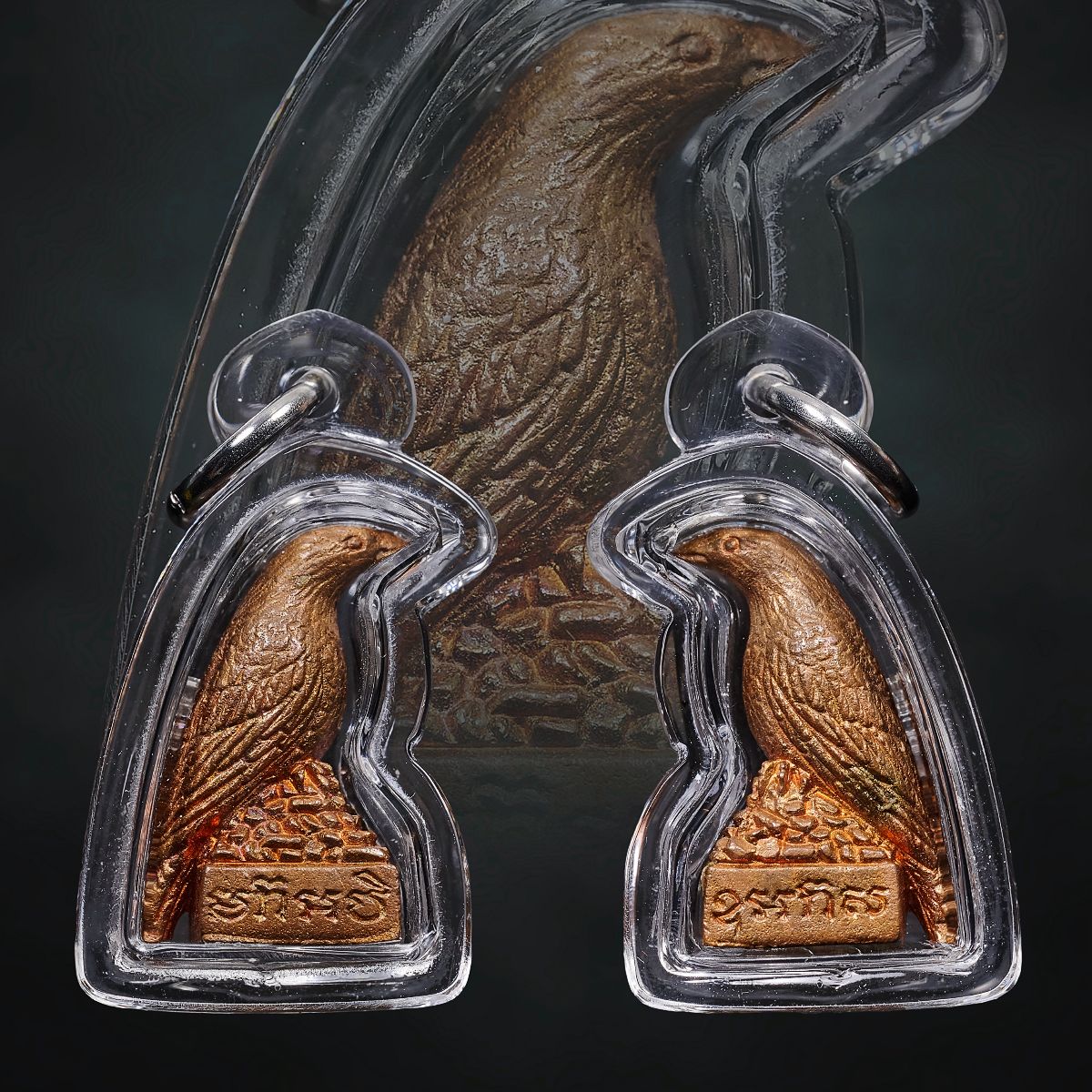
The Roon 2 Nok Salika was individually cast in Samrit, giving the bird its warm traditional metallic character and allowing the feathering, body and inscribed base to remain clearly defined.
The underside was filled with sacred powder retained from Ajarn Yo's highly regarded first-batch Salika, directly connecting the second generation with the materials and wicha of the earlier issue. Natural variations in casting, finishing and the preparation of the sacred powder make each artifact individually distinctive.
Personal Experiences Shared by Luksits
Among devotees, Nok Salika is particularly favoured by people whose livelihood depends upon speech, negotiation and personal interaction.
Feedback surrounding Salika-type artifacts commonly centres upon conversations becoming easier, customers being more receptive, introductions proceeding more naturally and the wearer feeling more confident when presenting an idea or making an important request.
This makes the Roon 2 particularly relevant for salespeople, business owners, negotiators and those whose work depends heavily upon communication.
The connection with the first batch is especially meaningful. Rather than creating the Roon 2 as an entirely separate object, Ajarn Yo incorporated powder from his earlier Salika into the base, carrying forward the material traditionally associated with Jerajaa, Metta Maha Niyom, Maha Saneh and wealth attraction.
Summary
The Nok Salika Roon 2 was created by Ajarn Yo Adisak of Samnak Song Sri Thaworn, Kanchanaburi, in B.E. 2567 (2024).
Only 3,000 pieces were produced.
Cast in Samrit, the artifact takes the distinctive form of the Salika bird standing upon an inscribed base. Its most important feature is concealed beneath the figure: the base was filled with sacred Salika powder from Ajarn Yo's first batch.
That earlier material traces back to an unusual experience during Ajarn Yo's forest practice, involving a tree said to possess a remarkable natural attraction for birds.
The Roon 2 therefore continues the principal Salika qualities of persuasive speech, Metta, personal charm, favourable communication, customer attraction and opportunities for wealth.
Historical Background
Nok Salika (นกสาริกา) occupies a distinctive position within Thai sacred-object traditions.
The Salika bird is particularly associated with the power of speech — not simply speaking fluently, but communicating in a manner that people find pleasant, memorable and persuasive.
This gave Salika imagery a natural place among merchants, negotiators, performers and anyone whose success depended upon communication.
In traditional amulet terminology, this quality is closely connected with Jerajaa and Metta Maha Niyom: persuasive communication accompanied by goodwill and favourable reception from others.
Salika subsequently became strongly associated with what collectors sometimes describe as “golden tongue” qualities — the aspiration that one's words are listened to, remembered and received positively.
For merchants, this naturally developed into an association with customers, commercial opportunities and wealth, since successful communication often stands at the beginning of successful business.
Origins of the Materials
The Roon 2 Salika was cast in Samrit, a traditional copper-based alloy category long associated with Southeast Asian sacred images and ritual objects.
More significant to the spiritual construction of this particular batch is what was placed beneath the casting.
Ajarn Yo filled the bottom with powder from his first-batch Salika, preserving a direct material connection between the two generations.
The origin story of that first batch is connected with Ajarn Yo's Thudong, or forest meditation pilgrimage.
During his forest practice, he encountered an unusual tree. According to the account surrounding the batch, local people had observed that different species of birds were repeatedly drawn towards the tree, gathering upon its branches and remaining there.
The phenomenon was interpreted through the traditional language of Metta Maha Niyom — natural attraction and the ability to draw living beings towards a particular presence.
Material associated with this encounter subsequently became connected with Ajarn Yo's Salika practice and the first batch.
By placing powder from that earlier issue into the Roon 2, Ajarn Yo established a physical and ritual continuity between the two batches rather than merely repeating the Salika design.
Ritual
Ajarn Yo's Salika practice combines the traditional symbolism of the bird with his own lineage of meditation and wicha.
Ajarn Yo, also known as Phra Ajarn Adisak Worayano, is associated with Samnak Song Sri Thaworn in Kanchanaburi.
His traditional wicha lineage includes teachings transmitted through older masters and is particularly associated with sacred yantra, takruts and old-style ritual practice.
For the Roon 2, the first-batch Salika powder placed beneath each bird forms an important part of the consecrated construction.
The intention centres upon the qualities traditionally associated with Salika: Jerajaa, Metta Maha Niyom, Maha Saneh, persuasive communication and the attraction of favourable opportunities.
The bird form therefore functions together with the older sacred material placed within its base.
Blessings and Effects
The principal blessing of Nok Salika is traditionally speech.
It is carried with the aspiration that one's words become easier for others to listen to and receive favourably. This is particularly relevant where success depends upon explaining, presenting, negotiating or persuading.
The traditional qualities associated with the Roon 2 include Jerajaa, for persuasive and effective communication; Metta Maha Niyom, for goodwill and popularity; and Maha Saneh, for personal magnetism and attraction.
Its commercial aspect is equally important. Salika is traditionally carried to encourage customer attraction, smoother negotiations, successful business conversations and opportunities for financial movement.
The purpose is best understood as strengthening favourable communication and personal presence rather than overriding another person's judgement or free choice.
Modern Application
Nok Salika remains particularly relevant in modern professions because so much commercial and professional success still depends upon how effectively a person communicates.
A salesperson may carry it before meeting an important client. A business owner may approach Salika for returning customers and smoother negotiations. Someone attending an interview may use it as a devotional focus for confidence and clear expression.
It is equally relevant for teachers, presenters, managers, customer-service professionals, performers, content creators and those whose work requires frequent networking.
For business use, its traditional qualities form a natural sequence:
good speech → favourable reception → stronger relationships → greater opportunity.
This helps explain why Salika remains closely connected with both Metta and wealth, even though its fundamental symbolism begins with communication.
Physical Details
The Nok Salika Roon 2 was created by Ajarn Yo Adisak in B.E. 2567 (2024), with a recorded production of 3,000 pieces.
The artifact is cast in Samrit and formed as a standing Salika bird with its head raised slightly forward. Individual feather details are visible across the body and wings, while the bird stands upon a textured mound above an inscribed rectangular base.
Its curved silhouette gives the piece an immediately recognisable bird form while remaining compact enough for pendant wear.
The bottom is filled with sacred powder from Ajarn Yo's first-batch Salika, establishing the principal material connection between the Roon 2 and its predecessor.
The example shown is protected within a clear fitted casing, preserving the Samrit surface while allowing the distinctive profile of the Salika to remain fully visible.
Recommended Pairing
Nok Salika may comfortably be worn alone when the principal intention is speech, Metta, customer relations and personal charm.
For merchants and business owners, it pairs naturally with a wealth-oriented artifact. Salika supports the human side of commerce — conversation, persuasion, goodwill and customer response — while the accompanying artifact may concentrate more specifically upon financial movement and prosperity.
It may also be paired with a respected monk image when the wearer prefers to balance specialised Salika wicha with a principal Buddhist devotional amulet.
Personal Notes
What makes the Roon 2 Nok Salika particularly interesting is not simply its Samrit construction or limited production of 3,000 pieces.
Its strongest point is its connection to Ajarn Yo's first batch.
By filling the bottom of the Roon 2 with first-batch Salika powder, Ajarn Yo carried an important element of the earlier creation directly into the later issue.
That earlier material itself carries the story of his forest practice and the unusual tree that was remembered for drawing numerous birds towards it.
This creates a clear continuity of concept: a naturally observed form of attraction became associated with the first Salika, and material from that batch was subsequently preserved within the second.
For devotees whose work depends upon customers, negotiation, presentation or persuasive speech, the Roon 2 is therefore a particularly practical expression of an old Thai Salika tradition — speak well, be received well, and allow opportunity to follow.
-
Free Shipping for Singapore| $15 Worldwide | $60 USA For Items Below $350