
OOBThaiAmulets
Ajarn Nen - Wat Pa Sak
Ajarn Nen - Wat Pa Sak
Couldn't load pickup availability
MS06
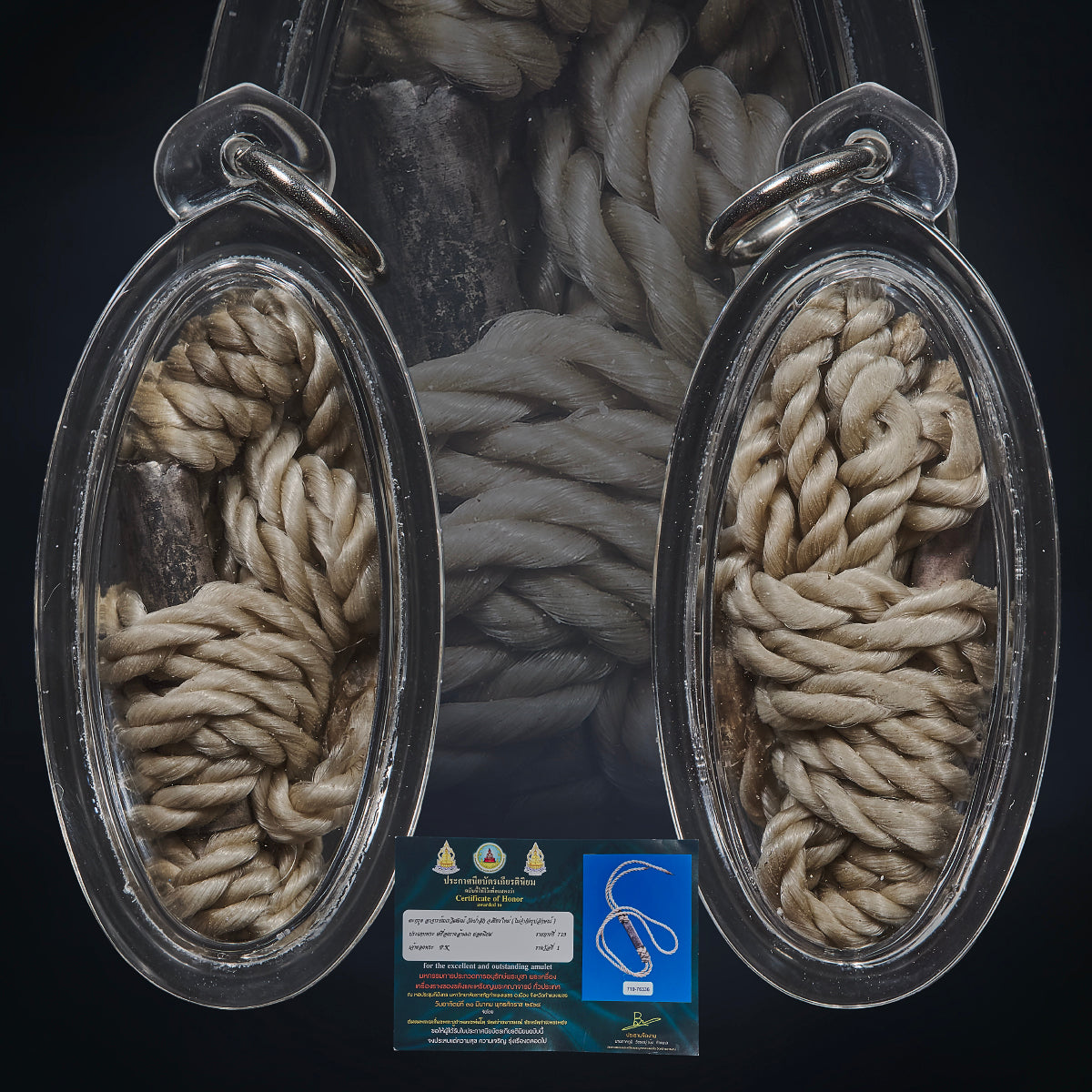
Takrut Salika Jampa Bin
Ajarn Nen Wisetsingkham · Wat Pa Sak · San Pa Tong, Chiang Mai
B.E. 2515–2516
1.5 Inches
Mainstream Artifact
1st Placing in a Samakom Competition
Individual Craftsmanship
His Bio can be read here:
https://oobamulets.com/blogs/news/ajarn-nen-wisetsingkham?_pos=15&_sid=711085b54&_ss=r
These pieces were individually prepared rather than modern factory-made objects. Differences in the metal roll, surface ageing, cord arrangement and wear are therefore natural characteristics of surviving examples.
Personal Experiences Shared by Luksits
Ajarn Nen became particularly well known around San Pa Tong during the B.E. 2510s–2520s, when people travelled considerable distances to seek his sacred objects, yantra tattoos and blessings.
Accounts preserved by his disciples describe visitors arriving not only from Chiang Mai but also from Bangkok. Among them were performers, singers, boxers and people whose livelihoods depended upon public recognition and personal presence.
Some came specifically for takrut, while others sought Sak Yant or protective objects.
Most of Ajarn Nen's better-known works developed a reputation for Klaew Klaad, Kong Kraphan and protection, which is one reason his Metta-oriented takrut such as this Salika are considered less commonly encountered.
Stories surrounding Ajarn Nen's protective wicha are also preserved through Kruba Lert, a disciple who studied under him and later became abbot of Wat Pa Sak. These include accounts of Ajarn Nen surviving armed attacks and demonstrations of protective Sak Yant. Such stories belong to the oral history of his lineage and are best understood as disciple testimony rather than independently documented events.
Summary
The Takrut Salika Jampa Bin is one of Ajarn Nen Wisetsingkham's comparatively uncommon Metta and Maha Saneh takrut, traditionally dated to approximately B.E. 2515–2516.
Its purpose differs slightly from the strongly protective objects for which Ajarn Nen became famous.
Rather than concentrating primarily on invulnerability or protection from weapons, the Salika formula was directed towards speech, attraction, popularity, negotiation and commerce.
In Thai sacred tradition, Salika invokes the symbolism of the small, sweet-voiced bird. The underlying principle is that a person's words become pleasant to hear: people are more inclined to listen, conversations flow more easily, and requests or negotiations receive a favourable reception.
For traders, performers and those whose work depends upon communication, this made Salika wicha particularly valued.
Historical Background
Ajarn Nen Wisetsingkham was born on 5 December B.E. 2496 (1953) at Ban Pa Sak, San Klang, San Pa Tong District, Chiang Mai. He was the fourth of six children of Bunmee Singkham and Kongkaew Singkham.
He later became closely associated with Wat Pa Sak and developed a considerable reputation within the San Pa Tong area for northern Thai occult practice.
According to accounts preserved by his disciples, the period from approximately B.E. 2510–2525 represented an important era in his reputation. His wicha became known beyond Chiang Mai, attracting people who travelled specifically to obtain sacred objects or receive Sak Yant from him.
Among the objects most closely associated with his name were his Guman Thong prepared with spirit-related powders and his cemetery Wua Thanu.
He was also particularly respected for protective wicha concerning Khong Kraphan, Klaew Klaad and Kham Meed Kham Peun—protection against blades, firearms and physical danger.
This background helps explain why surviving examples of his specifically Metta-oriented takrut are particularly interesting within his body of work.
Origins of the Materials
Takrut are traditionally created by inscribing sacred characters, yantras or kata onto a thin sheet of metal before rolling it tightly into a tubular form.
The physical metal is only one part of the object. Within northern Thai wicha, equal importance is given to the formula inscribed upon it, the master's lineage and the ritual through which the takrut is activated.
The Salika formula belongs to a different conceptual family from purely defensive takrut.
Its emphasis is on the human voice and the response it produces in others—being heard, liked, remembered and received favourably.
This is why Salika wicha has long been connected with merchants, negotiators, performers and occupations where words themselves are important.
Ritual
The Takrut Salika Jampa Bin was reportedly produced around the same period as several other recognised takrut and yantra forms associated with Ajarn Nen.
These included Takrut Pii Kep, Takrut Mae Nam, Takrut Kao Kum, Yant Neep, Takrut Jing Jok Song Hang, and his single-piece Metta takrut.
Each formula served its own purpose, but the Salika belonged particularly to the group concerned with Metta Maha Niyom, Maha Saneh, speech and commercial negotiation.
The prepared metal would traditionally be inscribed according to the required wicha before being rolled into takrut form. The completed object was then empowered through the master's kata and ritual practice.
Its sacred cord allowed it to be carried or worn in the traditional manner while keeping the small metal takrut secured to the wearer.
Blessings and Effects
The principal traditional qualities attributed to this Takrut Salika are Metta Maha Niyom, Maha Saneh, favourable speech and successful negotiation.
Salika wicha is especially associated with Jeraja—the ability to speak in a manner that others are willing to hear and consider. For someone involved in trade, this naturally extends towards selling, negotiating prices, discussing contracts and maintaining good relationships with customers.
Its traditional purposes therefore include:
- Metta Maha Niyom — goodwill, popularity and favourable treatment.
- Maha Saneh — attraction and personal charm.
- Jeraja — persuasive and well-received speech.
- Kha Khai — support for selling and commerce.
- Customer relations — easier communication and favourable interaction.
- Public presence — traditionally relevant to performers and occupations requiring personal charisma.
These are traditional beliefs associated with the wicha rather than guarantees of particular outcomes.
Modern Application
The underlying idea of Salika remains particularly easy to understand in a modern setting.
For a salesperson, it represents clear and persuasive communication. For a business owner, it relates to customer goodwill and returning clients. For someone negotiating agreements or contracts, its traditional emphasis is upon having one's words received favourably.
It may similarly appeal to people involved in management, presentations, entertainment, client-facing professions or any occupation in which personal presence and communication directly affect opportunity.
Unlike a purely wealth-oriented takrut, its principle is indirect: opportunity comes through people, conversation and favourable human relationships.
Physical Details
This Takrut Salika Jampa Bin dates to approximately B.E. 2515–2516 and measures around 1.5 inches. The rolled metal takrut is accompanied by a substantial length of aged sacred cord arranged for traditional carrying or wearing. The visible ageing of both metal and cord gives the piece a distinctly old character consistent with a talisman preserved over many decades. It is now housed within a fitted clear protective casing, allowing the original takrut and cord arrangement to remain visible.
Recommended Pairing
The Takrut Salika may be worn alongside a Phra Somdej or another mainstream Buddhist amulet, particularly for those carrying it for work or business.
It can also be paired with a wealth-oriented takrut or Nang Kwak, creating a traditional combination in which one artifact supports commerce and wealth while the Salika concentrates on speech, customer relations and favourable reception.
Personal Notes
What makes this Takrut Salika especially interesting within Ajarn Nen's works is that it represents a different side of a master remembered primarily for powerful protective wicha.
His reputation was strongly connected with Klaew Klaad, Kong Kraphan, protective Sak Yant, Guman Thong and Wua Thanu. By comparison, his old Metta, Maha Saneh and Salika pieces appear less frequently.
The B.E. 2515–2516 dating also places this example within the period when Ajarn Nen's reputation was becoming firmly established around San Pa Tong.
Preserved with its old cord and measuring only around 1.5 inches, it is a small artifact carrying a very specific purpose: not force or confrontation, but the traditional Lanna art of allowing one's words and presence to open the way.
-
SG: Free | Worldwide except USA: $20 Registered | USA: $25 Registered / $100 Courier (SGD)