
OOBThaiAmulets
AJ Narottama - Rian Asawattha B.E 2535
AJ Narottama - Rian Asawattha B.E 2535
Couldn't load pickup availability
MS05
Rian Asawattha
Wat Don Yannawa
Jak Phet Roon 2
B.E. 2535 (1992)
1.5 Inches
Mainstream Artifact
━━━━━━━━━━━━━━━━━━━━━━━━━━━━
Sacred Craftsmanship
The Rian Asawattha, also recognised as Jak Phet Roon 2, is a distinctive sacred medal associated with the spiritual lineage of Thao Maha Phrom Thada, the Great Brahma Teacher, and Ajarn Narottama, the successor to Ajarn Wirat Luptsa's teachings.
Thao Maha Phrom Thada also widely known as Phra Phrom — the Thai representation of the Hindu creator god Lord Brahma or internationally as the "Four-Faced Buddha"
Each medal was individually produced using prepared sacred metal materials, and natural variations in colour, surface texture and striking details make every piece distinctive.
Exact piece to be given
━━━━━━━━━━━━━━━━━━━━━━━━━━━━
Personal Experiences Shared by Luksits
Among followers of the Asawattha lineage, this medal has long been associated with favourable human relationships, professional advancement and the ability to gain acceptance from others.
It became particularly popular among performers, musicians, actors, singers and people working in public-facing professions, where personal charm and recognition are important.
Devotees have traditionally spoken of improved relationships with colleagues, greater support from influential people and increased confidence when approaching important opportunities.
Business owners and salespeople also value the medal for Metta Maha Niyom, believing that its blessings help customers become more receptive, encourage cooperation and create favourable circumstances for trade.
━━━━━━━━━━━━━━━━━━━━━━━━━━━━
Summary
The Rian Asawattha B.E. 2535 is an important sacred medal within the spiritual tradition established by Ajarn Wirat Luptsa and continued by Ajarn Narottama.
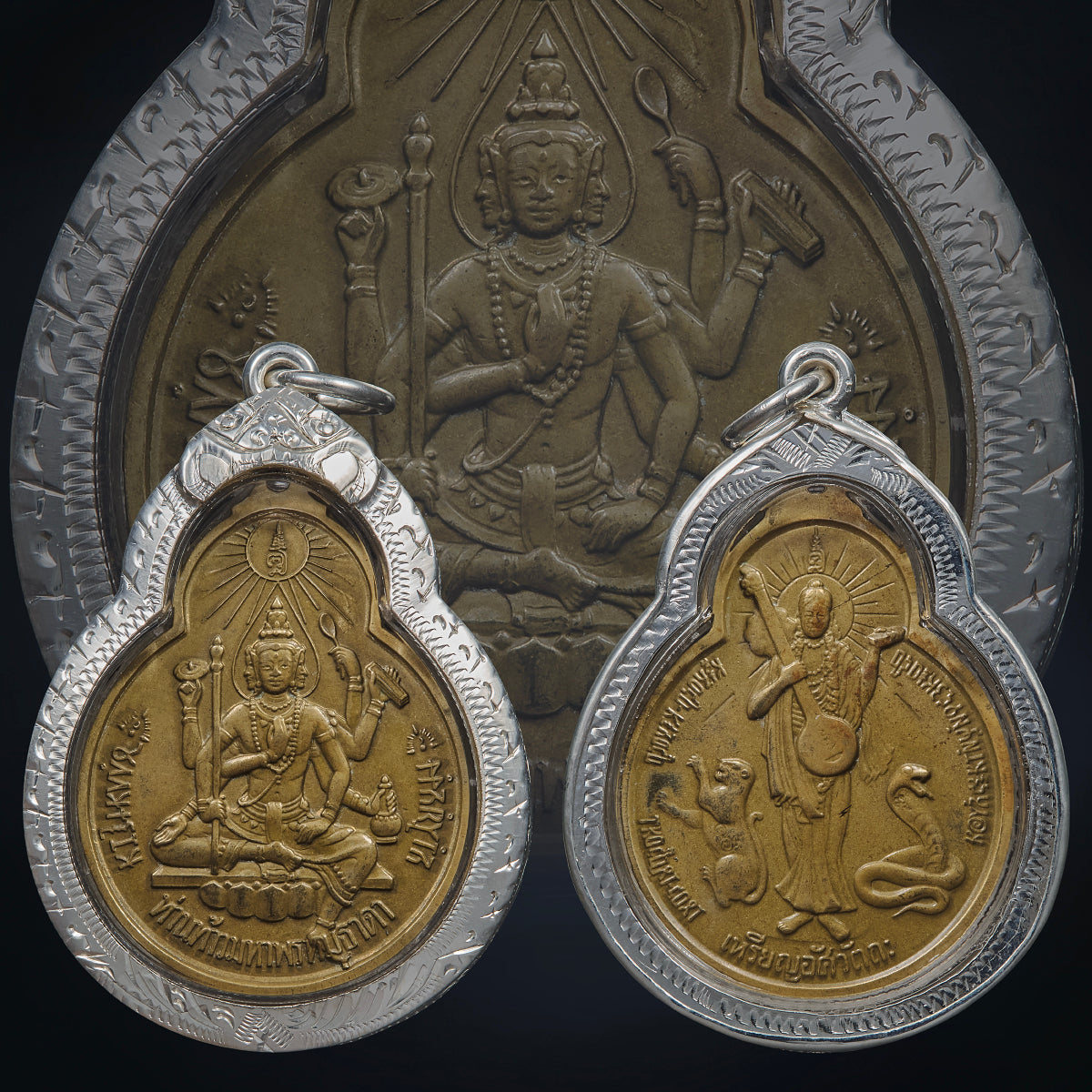
Its front represents Thao Maha Phrom Thada, regarded by followers as a compassionate Great Teacher who grants wisdom, protection and spiritual support.
The reverse features Deva Narada, a celestial sage closely associated with music, artistic knowledge, communication and devotion to Phra Narai.
The accompanying Seur and serpent introduce protective symbolism, creating a combination traditionally associated with attraction, authority, good fortune, protection and the removal of obstacles.
Its elaborate consecration history, incorporating Brahmanic rites, Buddhist chanting and ceremonies conducted at several locations, further distinguishes this issue.
━━━━━━━━━━━━━━━━━━━━━━━━━━━━
Historical Background
The Origins of Jak Phet and the Asawattha Medal
The history of the Asawattha medal is closely connected with Ajarn Wirat Luptsa, a spiritual practitioner associated with the worship of Thao Maha Phrom Thada.
In B.E. 2508 (1965), Ajarn Wirat introduced the original Jak Phet medal as a devotional representation of the Great Brahma Teacher and his teachings.
According to lineage tradition, the medal was intended to convey the compassionate blessings of the Great Teacher, likened to the enduring care and protection of one's parents.
Following Ajarn Wirat's passing in B.E. 2509, responsibility for preserving and continuing the teachings was entrusted to Ajarn Narottama, also respectfully known as Ajarn Por.
Ajarn Narottama subsequently established the Purushottama Centre for the Study of Truth in Racha Thewa, Bang Phli, Samut Prakan.
As the number of devotees increased, demand for the original Jak Phet medals eventually exceeded the available supply.
A new sacred medal was therefore commissioned under the name Asawattha, continuing the earlier lineage while introducing its own distinctive imagery.
Although associated with the B.E. 2535 issue, preparations and consecration activities had already begun during B.E. 2533–2534.
Thao Maha Phrom Thada
Within this lineage, Thao Maha Phrom Thada is revered as a Great Teacher embodying compassion, wisdom, spiritual authority and protective guardianship.
His image on the front of the medal represents the relationship between teacher and disciple, with blessings understood to arise through sincerity, respect and continued remembrance of the teachings.
Deva Narada – The Celestial Sage
The reverse depicts Narada, a sage celebrated in Hindu religious tradition for his devotion to Vishnu, his musical knowledge and his role as a messenger between divine and earthly realms.
In Thai esoteric traditions, Narada is also associated with Pu Lersi Narot, a revered teacher figure connected with sacred knowledge, artistic ability and personal magnetism.
This association helps explain the medal's longstanding popularity among people working in music, entertainment and the performing arts.
━━━━━━━━━━━━━━━━━━━━━━━━━━━━
Origins of the Materials
The Asawattha medal was produced using brass and sacred metal components associated with the earlier Jak Phet lineage.
According to traditional accounts, the casting mixture incorporated Nur Chanuan from the original Jak Phet medals, together with other ritually prepared materials collected through the lineage.
Materials described in these accounts include:
-
Sacred metal filings associated with earlier Brahma images and consecrated objects.
-
Minerals obtained from caves and spiritually significant locations.
-
Traditional sacred woods and other auspicious natural materials.
-
Materials associated with previous teacher-honouring ceremonies.
-
Consecrated oils and preparations connected with the Great Brahma Teacher tradition.
Some lineage accounts also describe the use of metal filings associated with objects blessed by respected monks, including LP Toh of Wat Pradu Chimphli, LP Nak of Wat Rakhang and LP Pae of Wat Phikun Thong.
These descriptions reflect the recorded traditions surrounding the production; the exact composition of an individual medal cannot be independently established from its appearance alone.
The incorporation of earlier sacred materials was intended to preserve continuity between Jak Phet Roon 1 and the later Asawattha issue.
━━━━━━━━━━━━━━━━━━━━━━━━━━━━
Ritual
Multiple Consecration Ceremonies, B.E. 2534–2535
One of the most significant aspects of the Asawattha medal is its extended consecration history.
Rather than being associated with a single ceremony, the medals reportedly underwent several stages of Brahmanic worship, devotional invocation and Buddhist blessing.
First Consecration – Purushottama Centre, B.E. 2534
The medals were placed within the Purushottama Centre for approximately one Buddhist Lent, during which teacher-honouring ceremonies and three sacred-water rites were conducted.
Second Consecration – Si Racha, Chonburi
From 7–9 November B.E. 2534, a three-day and three-night ceremony was conducted at a mountain location in Si Racha.
Third Consecration – Pha Daeng Coast, Si Racha
A further ceremony took place beside the sea from 20–22 November B.E. 2534, continuing the devotional preparations associated with the medal.
Fourth Consecration – Grand Buddhaphisek, 11–12 February B.E. 2535
The final major ceremony was conducted at the Purushottama Centre in Samut Prakan.
The recorded programme included Brahmanic offerings, invocations of celestial guardians, Buddhist chanting and the lighting of the principal consecration candle.
Respected monks associated with the ceremony included:
-
LP Pae, Wat Phikun Thong, Sing Buri.
-
Phra Thammathirarat Mahamuni, Wat Yannawa.
-
Phra Phrom Methi, Wat Traimit Wittayaram.
The ceremony also incorporated devotional invocations honouring Ajarn Wirat Luptsa and Thao Maha Phrom Thada, together with the participation of Ajarn Narottama and the lineage's followers.
This combination of Buddhist and Brahmanic observances is central to the medal's identity.
━━━━━━━━━━━━━━━━━━━━━━━━━━━━
Blessings and Effects
The Asawattha medal is traditionally associated with several complementary qualities.
1. Maha Saneh – Personal Attraction
One of its most recognised associations is the cultivation of personal magnetism, making the wearer more approachable and favourably regarded by others.
2. Metta Maha Niyom – Universal Goodwill
Traditionally sought for harmonious relationships, assistance from others, popularity and favourable treatment in professional or social settings.
3. Artistic Recognition and Success
Through its connection with Deva Narada, the medal is particularly valued by musicians, actors, singers, entertainers and those whose livelihoods depend upon public recognition.
4. Baramee – Authority and Personal Presence
The image of Thao Maha Phrom Thada represents dignity, spiritual authority and the ability to inspire confidence and respect.
5. Chok Larp and Prosperity
Devotees associate the medal with favourable opportunities, financial improvement and the support needed to advance in business or employment.
6. Protection from Hostile Influences
The Seur and serpent on the reverse symbolise protective strength, traditionally associated with guarding against malicious intentions and overcoming adversity.
7. Wisdom and Guidance
The Great Teacher and Narada together represent knowledge, discernment and the ability to make sound decisions when facing uncertainty.
The blessings described above belong to the medal's traditional religious and esoteric interpretation.
━━━━━━━━━━━━━━━━━━━━━━━━━━━━
Modern Application
The Asawattha medal is especially suited to people whose work depends upon communication, recognition, influence and favourable relationships.
Artists, musicians, performers and content creators may appreciate its association with Deva Narada, while business owners, salespeople and professionals may be drawn to its reputation for Metta Maha Niyom and prosperity.
It is also meaningful for those seeking greater confidence, stronger personal presence or a devotional connection with the Great Brahma Teacher lineage.
The medal may be worn daily or kept at a personal altar as an object of respect and remembrance.
━━━━━━━━━━━━━━━━━━━━━━━━━━━━
Physical Details
This example is a brass, shield-shaped Asawattha medal featuring Thao Maha Phrom Thada seated beneath a radiant sacred emblem on the front, with inscriptions and yantric characters along the sides. The reverse depicts Deva Narada holding a musical instrument, accompanied by a Seur and serpent. The brass retains a warm golden tone with visible aged surface characteristics. Both sides are protected within an ornate silver-coloured casing with engraved decorative borders and a suspension ring.
━━━━━━━━━━━━━━━━━━━━━━━━━━━━
Recommended Pairing
The Asawattha medal already combines Metta Maha Niyom, Maha Saneh, baramee, prosperity and protective symbolism, making it suitable for wearing alone.
For those seeking greater emphasis on wealth and commercial opportunities, it may be paired with Phra Sivali, traditionally associated with abundance and support during one's travels and livelihood.
For devotees wishing to strengthen the Buddhist devotional aspect of their collection, a Phra Somdej provides a complementary focus on mindfulness, merit and spiritual steadiness.
Those involved in performing arts may also choose to wear the Asawattha medal by itself, allowing the imagery of Deva Narada and the Great Brahma Teacher to remain the central devotional focus.
━━━━━━━━━━━━━━━━━━━━━━━━━━━━
Personal Notes
The Asawattha medal is particularly interesting because its identity extends beyond the image of a single deity.
It represents the continuation of an established spiritual lineage, beginning with Ajarn Wirat Luptsa's original Jak Phet medal in B.E. 2508 and continuing through Ajarn Narottama's work in preserving the teachings.
The combination of Thao Maha Phrom Thada on the front and Deva Narada on the reverse is especially distinctive. One represents compassionate spiritual authority, while the other embodies communication, music, sacred knowledge and personal attraction.
The presence of the Seur and serpent further distinguishes the medal from conventional Brahma imagery.
Its recorded consecration ceremonies across different locations, culminating in the major B.E. 2535 Buddhaphisek, are also an important part of its collector interest.
For those studying Thai Brahmanic and esoteric sacred objects, the Rian Asawattha Jak Phet Roon 2 remains a noteworthy example of how teacher lineage, ritual materials, religious iconography and devotional practice were brought together within a single medal.
━━━━━━━━━━━━━━━━━━━━━━━━━━━━
-
Free Shipping for Singapore| $15 Worldwide | $100 USA All products