
OOBThaiAmulets
Ajarn Narosottama
Ajarn Narosottama
Couldn't load pickup availability
Box: YN50
Asawattha Medal (B.E. 2535)
Summary
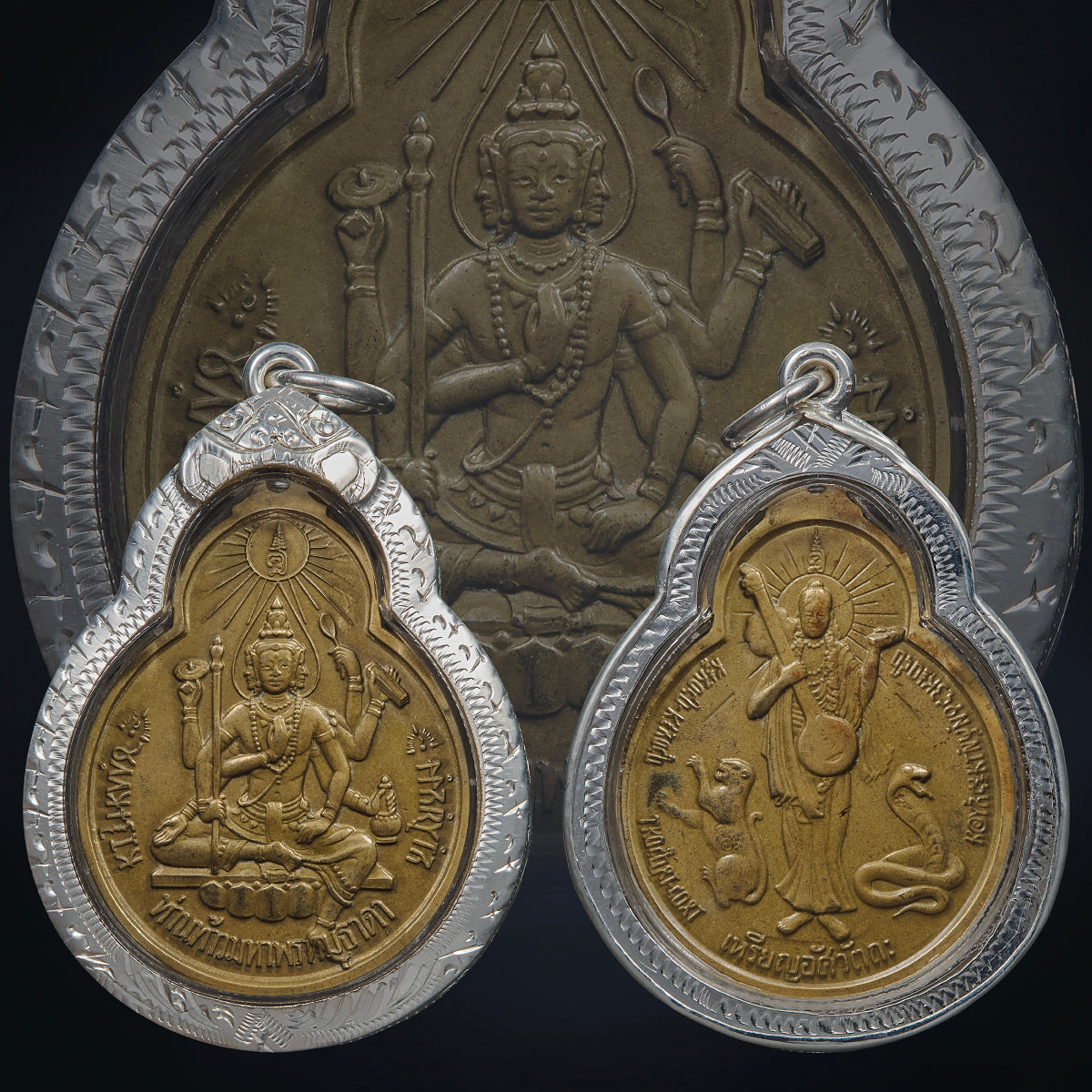
The Asawattha Medal was officially created in B.E. 2535 (1992) under the guidance of Ajarn Narosottama, successor to the spiritual lineage of Somdej Boromkru Thao Mahapromthada. Produced in brass with the popular reverse-radiance design (Rasmiyorn Pim Niyom), the medal was intended as a sacred representation of the teachings, blessings, and spiritual protection of the lineage.
The front depicts Thao Mahapromthada, revered as the supreme teacher and spiritual guide of the tradition. The reverse features Thep Narat, known in many traditions as Narod Ruesi, the celestial sage and divine messenger. Through its symbolism and extensive consecration ceremonies, the Asawattha Medal became one of the most recognized sacred objects associated with the Purusottama Truth Research Center.
Historical Background
The origins of the Asawattha Medal can be traced back to the earlier Chak Phet Medal created in B.E. 2508 (1965) by Samanean Virach Luptsa. This sacred medal was established as a representation of the teachings and blessings of Somdej Boromkru Thao Mahapromthada and became highly sought after among disciples and devotees.
As the number of followers continued to grow throughout the 1980s and early 1990s, demand for the Chak Phet Medal exceeded available supply. Disciples requested that Ajarn Narosottama create a new sacred object that could continue the mission of spreading the teachings while serving as a focus for devotion and spiritual practice.
The result was the creation of the Asawattha Medal. Named after the sacred Asvattha Tree, which has long been associated with wisdom, knowledge, and spiritual growth, the medal was designed to embody the blessings of the lineage while remaining accessible to both disciples and the general public.
Origins of Materials
The medal was produced in brass, a traditional alloy widely used in sacred medal production due to its durability and suitability for ritual consecration.
The design incorporates numerous esoteric symbols connected to the lineage. The front features Thao Mahapromthada surrounded by sacred Brahma-script yantras. Above the yantras appears the Tanokhao symbol, an important mystical character transmitted through spiritual writings associated with the lineage.
The reverse portrays Thep Narat, the celestial sage renowned for carrying divine messages between worlds. Additional Brahma-script yantras appear on both sides of the medal together with symbolic representations of the tiger and white serpent, traditional emblems associated with authority, protection, victory, and spiritual power within the school.
Ritual
The Asawattha Medal underwent an extensive series of consecration ceremonies between B.E. 2534 and B.E. 2535.
The first stage consisted of Brahma consecration ceremonies held at the Purusottama Truth Research Center. Over the course of an entire Buddhist Lent period, the medals were continuously blessed and additionally empowered through three separate Nam Thip ceremonies.
The second consecration was conducted atop Khao Phra Khru Sri Racha in Chonburi Province from 7–9 November B.E. 2534. The ceremony lasted three days and three nights and focused on celestial invocations and spiritual empowerment.
A third ceremony took place at the coastal cliffs of Pha Daeng Beach in Si Racha from 20–22 November B.E. 2534. Again lasting three days and three nights, the ritual sought blessings through the elemental forces of sea, wind, and sky.
The final Maha Phutthaphisek ceremony was held on 11–12 February B.E. 2535 at the Purusottama Truth Research Center in Samut Prakan. The event included Buddhist chanting, Brahmanical rites, planetary worship ceremonies, and formal consecration rituals.
Among the respected spiritual figures participating were Luang Por Pae of Wat Pikulthong, senior monks from Wat Yannawa and Wat Traimit, together with Brahmin masters and disciples of the lineage. The ceremonies culminated in invocations to revered teachers, rishis, and accomplished masters, followed by the ceremonial invitation of Somdej Boromkru Thao Mahapromthada to bestow final blessings upon the medals.
Blessings & Effects
Within the lineage, the Asawattha Medal is associated with compassion, goodwill, personal charisma, and harmonious relationships. Devotees often seek the medal when wishing to improve communication, strengthen personal connections, and cultivate a positive presence among others.
The image of Thep Narat on the reverse is traditionally linked to eloquence, reputation, and successful interaction with people from all walks of life. The sacred yantras incorporated into the design are believed to support confidence, authority, and protection during daily activities.
The symbolism of Thao Mahapromthada on the front reflects guidance, wisdom, parental blessings, and the nurturing qualities of a spiritual teacher. For many devotees, the medal serves as a reminder of gratitude, discipline, and ethical conduct.
Modern Application
Today the Asawattha Medal remains popular among business owners, sales professionals, public speakers, performers, and individuals whose success depends upon communication and public interaction.
Many collectors choose to carry the medal during important meetings, negotiations, presentations, or social gatherings. Others place it on personal altars as a representation of the lineage and as a focus for daily prayer and meditation.
The medal is also commonly included within collections dedicated to Brahma-related traditions, celestial teachers, and esoteric Thai spiritual lineages.
Physical Details
This example is the Asawattha Medal, B.E. 2535, brass composition, popular reverse-radiance variety (Rasmiyorn Pim Niyom).
The obverse depicts Thao Mahapromthada surrounded by sacred Brahma-script yantras and lineage symbols. The reverse portrays Thep Narat together with additional yantras and protective emblems associated with the tradition.
The medal retains its original appearance and displays the characteristic details expected of the popular brass issue from the original production run.
Recommended Pairing
Collectors often pair the Asawattha Medal with earlier Chak Phet Medals to represent the continuity of the lineage from Samanean Virach Luptsa through Ajarn Narosottama.
It is also commonly displayed alongside sacred objects connected to Brahma traditions, teacher lineages, and celestial sage traditions, creating a complete devotional set centered upon wisdom, guidance, spiritual protection, and personal development.
-
Free Shipping for Singapore| $15 Worldwide | $60 USA For Items Below $350