
OOBThaiAmulets
Ac Piak Ban Dibuk
Ac Piak Ban Dibuk
Couldn't load pickup availability
Takrut Maha Rote Pichai Songkram
Summary
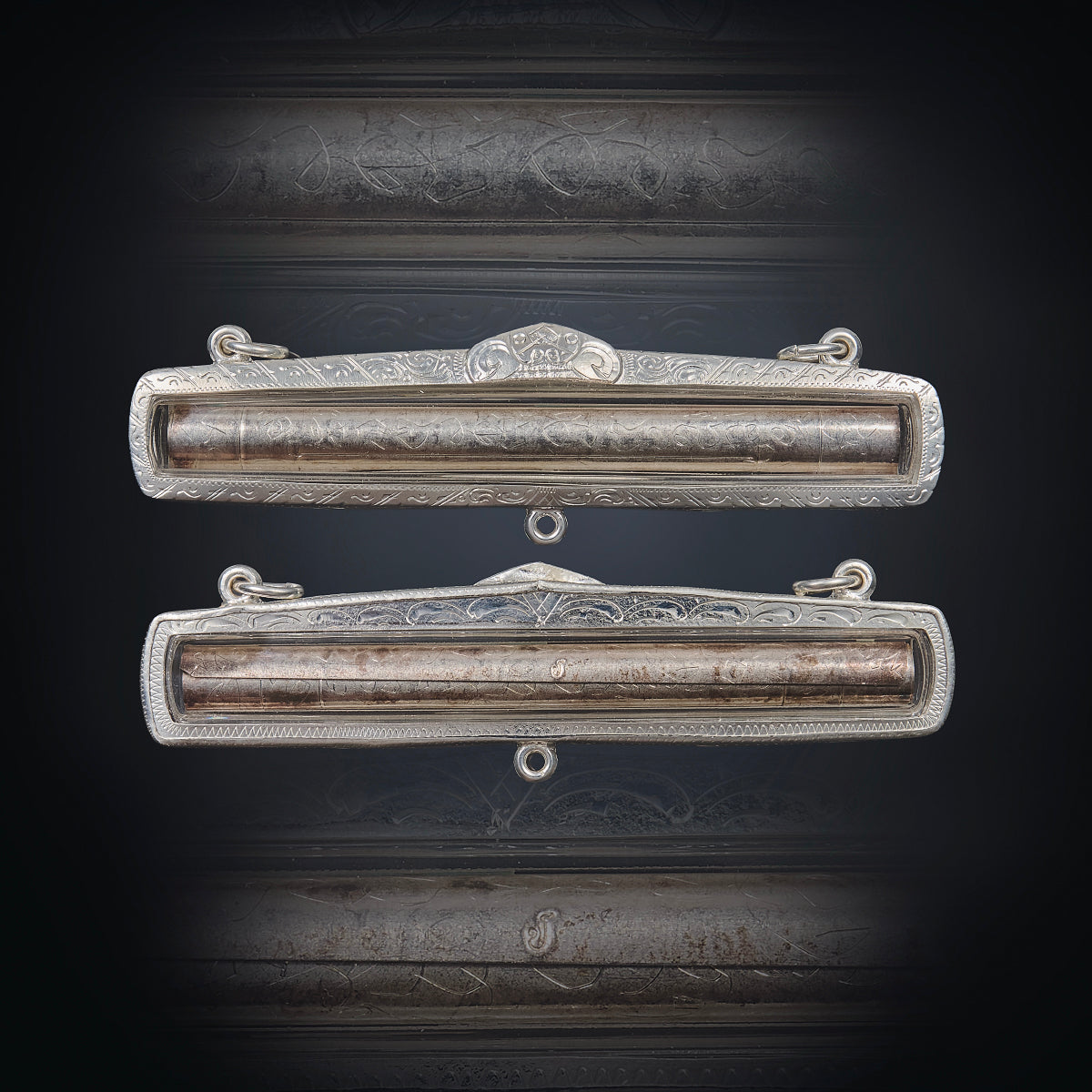
A classical martial takrut built upon the battlefield traditions associated with King Naresuan the Great and preserved through palace scholars of the Front Palace lineage. The wicha integrates southern manuscript knowledge from Nakhon Si Thammarat together with central Thai court ritual manuals, forming a complete structure of protection, authority, and victorious influence. Crafted from silver sheet and consecrated through an extended altar blessing cycle, the takrut supports commanding presence, decisive thinking, and stable leadership in situations where respect and influence are required.
Historical Background
The Takrut Maha Rote Pichai Songkram emerges from the martial ritual systems developed during the Ayutthaya period, when warfare was inseparable from sacred preparation. Elite guards, battlefield monks, and royal ritual specialists carried protective inscriptions and takruts during campaigns, believing that victory required alignment of courage, spiritual discipline, and ritual protection.
The lineage is closely associated with the era of King Naresuan the Great. His legendary elephant duel against the Crown Prince of Ava became an enduring symbol of sovereignty and spiritual resolve. Chronicles of the period describe how royal campaigns were accompanied by consecrations, invocations, and protective inscriptions intended to strengthen morale and spiritual authority on the battlefield. These traditions formed the basis of the Maha Rote Pichai Songkram formula.
During the reign of King Narai, court scholars expanded the manuscripts and organized the knowledge into more formal ritual systems. At this stage the palace traditions interacted with the teachings of southern masters, particularly those from Nakhon Si Thammarat, whose manuscripts preserved older protective formulae and yantra structures. The integration of these streams created a unified system that carried elements of protection, authority, and auspicious influence.
The final preservation of the knowledge took place within the Front Palace tradition. Scholars connected to Prince Dam safeguarded several manuscript sources and ritual notes that formed the full structure of the wicha. These texts continued to circulate quietly among ritual specialists and teachers who maintained the original form of the inscriptions and consecration methods.
Through this transmission the Takrut Maha Rote Pichai Songkram reached modern practice while retaining the essential framework recorded in the palace and southern manuscripts.
Blessings and Effects
The takrut carries the symbolic authority connected with the victory of King Naresuan, a victory remembered as an embodiment of courage, sovereignty, and spiritual strength. Wearers often describe a strengthening of personal presence and a natural sense of respect from those around them. This quality reflects the baramee associated with royal authority and disciplined leadership.
The martial aspect of the formula is directed toward overcoming obstacles. The Pichai Songkram lineage focuses on maintaining composure during pressure, enabling the wearer to remain steady when faced with competition, negotiations, or difficult decisions. The influence is subtle yet stabilizing, encouraging clear judgment and controlled action.
Within the classical manuals the takrut also carries an element of metta that balances authority with approachability. Individuals who hold leadership positions often require both qualities simultaneously. The energy structure encourages interactions that remain respectful and harmonious while allowing the wearer’s authority to be recognized.
The extended altar consecration emphasizes inner steadiness. Over time the wearer may experience improved clarity of thought, confidence in decision-making, and a grounded mental state when navigating opportunities and challenges.
Materials
The takrut is constructed from solid silver sheet according to measurements preserved in the traditional manuscripts. Silver has long been associated with purity, clarity, and the stable conduction of sacred inscriptions within Thai ritual metallurgy.
The inscriptions combine knowledge drawn from three principal manuscript sources that together complete the structure of the wicha. Southern manuals preserved by Ajarn Kloy of Nakhon Si Thammarat provide the silver-plate inscription traditions. Ritual instructions transmitted through Luang Pu Kham of Wat Bangwa contribute the ceremonial procedures recorded in gold-sheet manuscripts. Palace notes preserved by scholars associated with Wang Thewet finalize the arrangement of the yantra structure and invocation sequence.
After the inscription process the takrut enters a prolonged consecration cycle. The piece is first introduced through a Wai Kru ceremony that acknowledges the lineage of teachers and protective forces connected to the wicha. It is then placed before the main shrine where daily recitations and offerings are performed for an entire year. At the completion of the cycle a final sealing blessing stabilizes the mantra field within the rolled structure.
The orientation of the inscriptions, the direction of the roll, and the placement of the sealing ends follow the sequence recorded in the classical manuals that define the Maha Rote Pichai Songkram lineage.
Usage in Modern Life
Although its roots lie in ancient battlefield traditions, the Takrut Maha Rote Pichai Songkram continues to serve individuals navigating demanding modern environments. Leadership roles, negotiations, and competitive fields often require the same qualities that warriors once depended upon: composure, authority, and clear judgment.
Professionals responsible for guiding teams or making strategic decisions often appreciate the sense of stability and confidence the takrut encourages. Business owners and entrepreneurs value the influence it lends during negotiations or discussions with partners and stakeholders.
Individuals interacting with senior figures, government representatives, or respected elders also find benefit in the balanced combination of authority and metta embedded in the wicha. The wearer maintains dignity and presence while conversations remain smooth and respectful.
Traditional instruction recommends wearing the takrut on the right side of the body. In Thai ritual culture the right side symbolizes the path of respectful approach toward elders and authority. Aligning the takrut with this direction supports the flow of influence and recognition associated with the lineage.
Within daily life the Takrut Maha Rote Pichai Songkram functions as a quiet companion for those who must act with responsibility, courage, and clarity while guiding others forward.
-
Free Shipping for Singapore| $15 Worldwide | $60 USA For Items Below $350