
OOBThaiAmulets
Ac Chum Wat Kao Orr 2496
Ac Chum Wat Kao Orr 2496
Couldn't load pickup availability
MS1
Summary
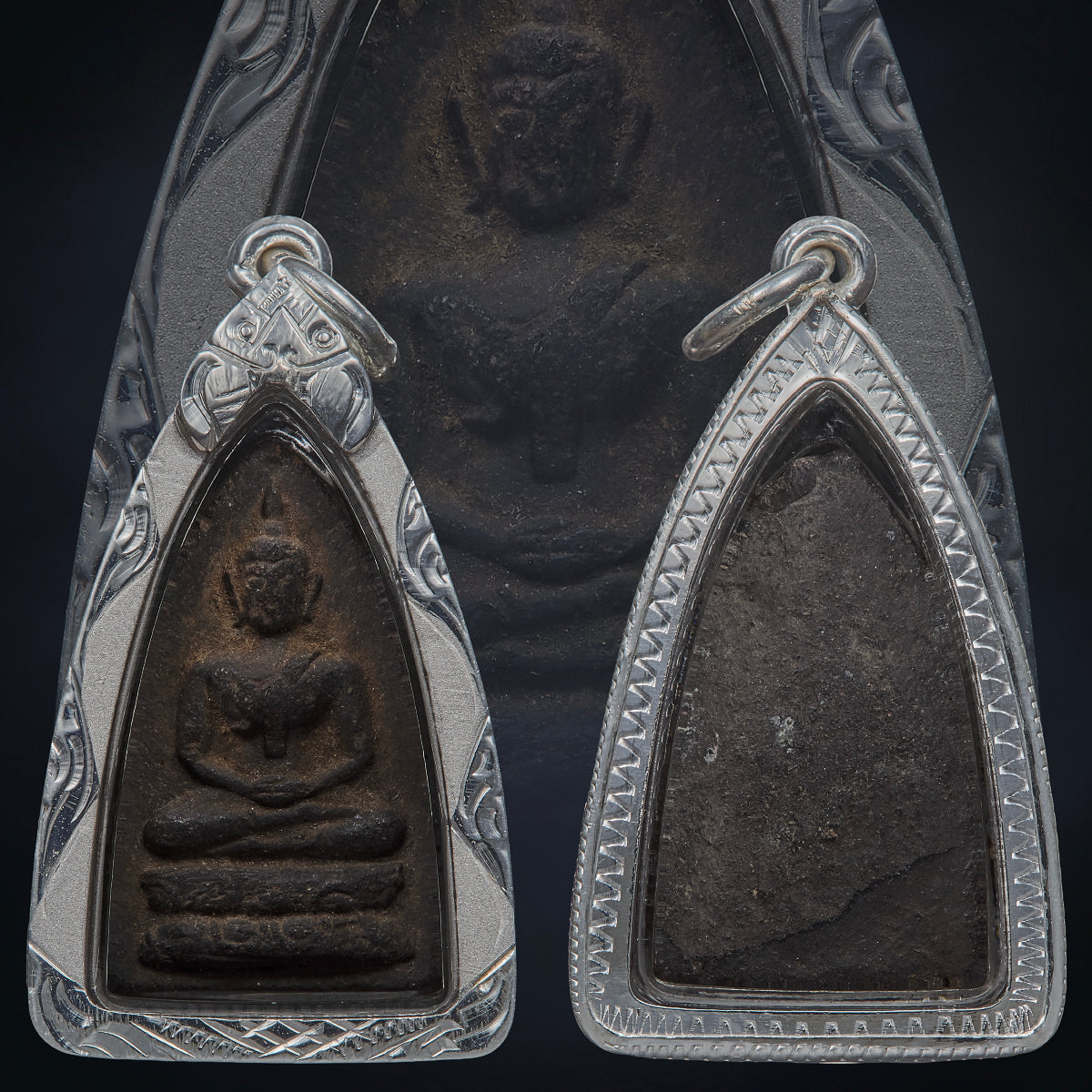
Phra Pong Thepnimit, lotus-petal shape, by Ajarn Chum Chai Kiree from the Wat Banphot Phinit ceremony of B.E. 2496 is one of the respected old Southern Thai powder amulets connected to the Khao Or current. Pieces from this era carry the atmosphere of old temple ritual work where sacred powders, herbal formulas, floral offerings, and prolonged chanting ceremonies were still performed according to inherited lineage methods.
The blessing profile of this batch centers around Metta Maha Niyom, smooth human relations, personal protection, steady life progress, and stability in dealings with others. Older Southern devotees commonly carried pieces like this during business, travel, negotiations, and periods where trust and support from people played an important role.
Historical Background
Ajarn Chum Chai Kiree was active during a period when the ritual influence of the Khao Or lineage remained deeply rooted across Southern Thailand. During the B.E. 2490 period, many ceremonies held around Khao Chaison still followed older Southern methods involving manual preparation of powders, herbal blending, sacred inscriptions, and long ceremonial chanting.
Wat Banphot Phinit itself was closely associated with the ritual environment surrounding Khao Chaison. Ceremonies conducted in this region often gathered monks, ritual practitioners, and devotees connected to the Southern occult and Buddhist current. Sacred powder amulets from this period were produced primarily for merit-making, temple distribution, and personal carrying among devotees.
Surviving examples today are increasingly difficult to encounter in untouched condition because many were actively worn over decades. Older Southern collectors often preferred to carry these powder pieces daily instead of storing them away, which is why naturally aged surfaces are highly appreciated today.
Origins of the Materials
The sacred powder blend reportedly included flowers previously offered in worship at respected royal temples and monasteries throughout Thailand. These floral remnants were combined with traditional ritual powders, sacred herbal substances, and temple materials gathered specifically for the ceremony.
Among the known ingredients were Phong Itthije powder, Na Pa Tha Mang powder, consecrated medicinal herbs, temple residue, and various sacred powders associated with Southern ceremonial practice. Older practitioners believed that floral offerings carried accumulated devotional energy from repeated acts of worship, making them suitable for creating amulets connected to harmony, acceptance, and blessings in daily life.
The powder composition itself carries the dry and matured texture often associated with older Southern pieces. When handled in person, authentic examples usually have a naturally compressed grain and aged surface character developed slowly over decades.
Ritual
The consecration followed the old Southern temple style where chanting sessions extended over prolonged periods with repeated mantra recitation and blessing ceremonies.
Ceremonies connected to the Khao Or current traditionally emphasized the combination of Buddhist chanting, sacred herbal knowledge, and ritual empowerment through inherited lineage methods. Materials were prepared manually and molds were hand pressed individually before entering consecration.
Older Southern ritual practice viewed sacred powder amulets as living ceremonial objects. The chanting process was intended to stabilize the energy of the materials while embedding protective and harmonious qualities into the finished piece.
Many older devotees believed the calm nature of these powder amulets came directly from the long ceremonial chanting and floral offerings used during preparation.
Blessings and Effects
Phra Pong Thepnimit is traditionally associated with Metta Maha Niyom, social harmony, protection, gradual prosperity, and smoother human relations.
Older businessmen and traders in Southern Thailand often carried powder amulets of this category because they believed such pieces helped maintain steady support from customers, associates, and surrounding people. The blessing profile leans toward calm stability and relationship building over long periods of time.
The amulet is also associated with protection during travel and daily movement. Older devotees frequently carried pieces like this while traveling between provinces, handling negotiations, collecting debts, or meeting unfamiliar individuals.
Personally, older Southern powder amulets have always carried a very distinct feeling once held in hand. Pieces from this era often feel calm and grounded without needing elaborate appearance or presentation. The texture itself usually tells the story first. Collectors who have spent time around old Khao Or material tend to recognize this atmosphere immediately.
Modern Application
Today, Phra Pong Thepnimit remains suitable for individuals whose work depends heavily on communication, reputation, and human interaction.
Business owners, salespeople, negotiators, property agents, transport operators, hospitality workers, and individuals managing large networks of people often appreciate the balanced nature of older Southern powder pieces.
It is also suitable for those who prefer calmer and steadier forms of support in daily life. Many experienced collectors continue carrying old powder amulets because they integrate naturally into everyday routines without requiring complicated ritual handling.
For modern users, this is the type of piece commonly carried during meetings, overseas travel, business discussions, family matters, and periods where maintaining stable relationships becomes important.
Physical Details
The amulet follows the classic lotus-petal mold associated with this B.E. 2496 Wat Banphot Phinit batch.
The ushnisha flame appears long and sharply pointed with a crown-like rounded formation beneath it. The face carries a trapezoid structure with closely positioned ears rising slightly above eye level.
The chest area is prominently raised while the lower body transitions softly due to the shallow mold depth. The arms display strong proportions with narrower lower sections leading toward the meditative hand posture.
The lotus base remains one of the clearer identifying features, with sharply defined ridges often remaining visible even on naturally worn examples.
Most authentic pieces today display natural aging, dry surface texture, and soft compression of the sacred powder over time.
Recommended Pairing
Phra Pong Thepnimit pairs well with old Southern protection pieces, especially amulets connected to Kongkraphan and travel protection.
Within practical daily wear, many collectors also combine calm powder amulets like this together with stronger authority-oriented pieces to balance social harmony with personal presence.
For individuals focused on business and communication, this style of Southern powder amulet also pairs naturally with older Metta-oriented takrut or Salika pieces carried separately.
Personal Notes
One thing I have always appreciated about old Southern powder amulets is how naturally they age over time. The surface slowly dries, compresses, and develops character from decades of handling. Many pieces from this era feel very “alive” in hand despite their simplicity.
Among older Khao Or material, pieces like Phra Pong Thepnimit carry a very calm atmosphere that experienced collectors tend to recognize immediately. Even without casing or elaborate decoration, the balance of the mold, texture of the powder, and mature surface character often speak for themselves once seen in person.
-
Free Shipping for Singapore| $15 Worldwide | $100 USA All products